
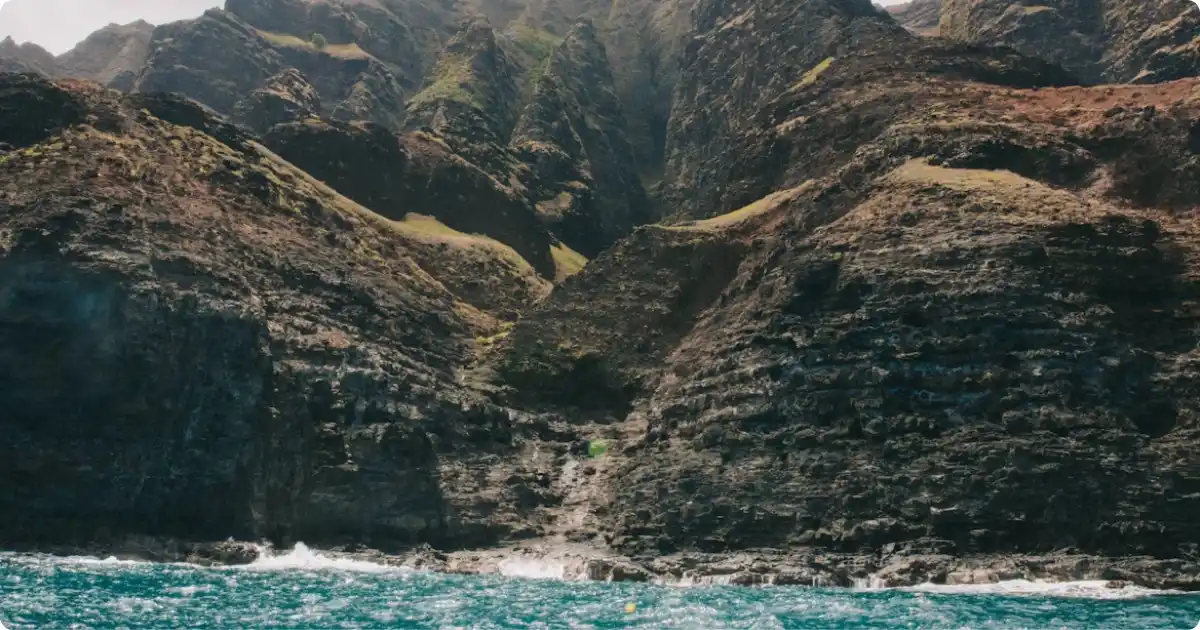

Most people assume Kauai is off-limits on a tight budget. It has a reputation the most remote of the main Hawaiian islands, no mega-malls, no budget hotel rows, and a price tag that looks intimidating on paper.
That reputation is only half true.
Yes, Kauai costs money. Every Hawaiian island does. But the things that make Kauai extraordinary the Na Pali Coast, Waimea Canyon, reef snorkeling, waterfall hikes are overwhelmingly free. Unlike Maui or Honolulu, where the tourist economy is built around paid experiences and resort corridors, Kauai’s greatest draws are its mountains, its coastline, and its jungle. None of them charge admission.
This guide shows you how to plan a Kauai trip that delivers the full experience without the financial hangover. Whether you’re traveling solo, as a couple, or with family, the same principles apply: stay on the East Shore, time your visit right, eat like a local, and let the island itself be the itinerary.
Is Kauai Really That Expensive?
| Island | Budget Infrastructure | Accommodation Cost | Free Outdoor Value |
|---|---|---|---|
| Oahu | Highest hostels, Costco, public transit, food trucks | Moderate widest range of budget options | Good beaches and hikes, but crowded |
| Big Island | Moderate spread across two coasts | Lowest overall among the four islands | High volcanoes, black sand beaches, free parks |
| Kauai | Limited few hostels, no budget hotel strip | Moderate East Shore condos most affordable | Very high Na Pali, Waimea Canyon, hiking all free |
| Maui | Limited resort-heavy, fewer budget options | Highest of the four islands | Good beaches strong, paid activities common |
Quick Answer
Kauai is more expensive than the US mainland but no more expensive than Maui, and in some categories it’s cheaper. Budget travelers can visit comfortably for $100–$175 per person per day or as low as $75–$100 with camping. The cost of Kauai’s top experiences is effectively zero.
Kauai’s higher costs come from its limited supply chain. Smaller islands pay more to import goods, and that flows through to grocery prices, restaurant bills, and accommodation rates. There are also fewer budget accommodation options than on Oahu no hostel district, no sprawling budget hotel strip.
What Kauai has instead: the best free hiking in Hawaii, affordable plate lunch culture, excellent farmers markets, and camping spots that rank among the most spectacular in the world. The island’s low commercialization is a feature for budget travelers, not a flaw. There simply isn’t much pressure to spend money because there aren’t many places asking for it.
Compared to the other islands, Kauai sits in the middle of the affordability range. Oahu has the most budget infrastructure hostels, Costco, cheap food trucks, public transit. The Big Island has the lowest accommodation prices overall. Maui is the most expensive. Kauai falls between Oahu and Maui: more limited in budget options, but far more rewarding outdoors, and with enough free experiences to make the gap irrelevant if you plan well.
When to Visit Kauai for the Best Prices
Timing is one of the most powerful levers in a Kauai budget. Peak season runs from mid-December through March (winter escape demand) and June through mid-August (summer families). During those windows, accommodation prices jump 30–40% above what you’d pay in the shoulder months.
The best value windows are late April through May and September through early October. Both offer dry weather across most of the island, smaller crowds, and significantly lower prices on rental cars and accommodation. Vacation rentals in Kapa’a that run near $180 per night in peak season drop to $110–$140 in shoulder months. Rental cars follow the same pattern.
September is particularly overlooked. It’s statistically the driest month on much of the island. The summer crowds have dispersed, North Shore beaches are calm enough for snorkeling, and the Kalalau Trail is fully accessible. West-coast flights also tend to dip during this period, making it one of the best all-around months to visit.
Winter visits are possible on a budget you just need to stay on the drier South Shore (Poipu) and accept that the North Shore will see afternoon rain from October through March. If you want waterfalls at their most dramatic, winter delivers. If you want dry beach days with cheaper prices, shoulder season wins.
How to Find Cheap Flights to Kauai
Flying Direct vs. Connecting Through Honolulu
Lihue Airport (LIH) receives direct flights from Los Angeles, San Francisco, Oakland, and Seattle. Direct service is convenient, but the smaller number of daily flights means less price competition than you’d find on Honolulu or Maui routes.
An alternative worth calculating: fly mainland-to-Honolulu (HNL), then catch a short interisland hop to Lihue. The mainland-to-Honolulu route has the most competition and regularly offers the lowest Hawaii fares. A 25-minute interisland flight on Southwest or Hawaiian Airlines adds a connection but can save $80–$150 on the total trip, especially if the HNL direct fares are on sale when Lihue fares aren’t.
This strategy also works well if you want to split time between islands land in Honolulu, spend a couple of days, then island-hop to Kauai.
When to Book and Where to Search
For direct Lihue flights, the general sweet spot is booking six to eight weeks in advance. Earlier than that and fares are often higher; much later and the cheaper seats are gone. Mid-week departures (Tuesday and Wednesday) consistently undercut weekend fares.
Set price alerts on Google Flights for LIH from your home airport. Check Southwest separately they don’t appear on Google Flights or most aggregators and run flash sales to Lihue that can be $100 below what other carriers charge. Being flexible by even a single travel day can make a substantial difference on a route this size.
Where to Stay in Kauai Without Overspending
Kapa’a and Wailua: The Budget Traveler’s Base
The East Shore specifically Kapa’a and Wailua is the most practical base for budget visitors. Accommodation here is the most affordable on the island, the location is central (roughly 20 minutes from the North Shore, 40 minutes from Poipu), and Kapa’a town has the best concentration of affordable restaurants and groceries outside of Lihue.
Vacation rental condos in this corridor often with kitchens offer the best value on the island. One-bedroom units at complexes like Kauai Kailani, Lae Nani, and Pono Kai Resort typically range from $100–$150 per night in shoulder season, often less when booked directly or through platforms like Airbnb and VRBO. A kitchen is the single most effective cost-cutting tool on the island: buying groceries and cooking even two of three daily meals can save $30–$50 per person per day.
The Kauai Beach House Hostel in Kapa’a remains one of the only true hostel options on the island, offering the lowest nightly rates available in any roof-over-your-head accommodation.
Poipu: Affordable Access to the South Shore
Poipu is Kauai’s resort belt, but condo complexes scattered through the neighborhood offer units starting well below the resort hotel rates. Complexes like Poipu Kai Resort and Nihi Kai Villas have individual owner-operated units that appear on Airbnb and VRBO at more competitive prices than the resort front desk quotes.
The advantage of a Poipu base is consistent dry weather year-round and walkable beach access. The disadvantage is that it’s farther from the North Shore and adds driving time. For budget travelers prioritizing sun and South Shore access, it’s a solid secondary option.
Camping: Kauai’s Biggest Budget Advantage
| Campsite | Location | Cost | Best For |
|---|---|---|---|
| Na Pali Coast (Kalalau Trail) | North Shore backcountry, no road access | ~$20 per person per night (DLNR permit) | Backpackers; bucket-list beach camping |
| Polihale State Park | Remote west side unpaved road access | Per-site fee; accommodates up to 6 people | Groups; remote beach experience |
| Koke’e State Park | Mountain upcountry above Waimea Canyon | Per-site fee; basic cabins also available | Hikers; cool weather; canyon trail access |
| Anini Beach Park | North Shore reef-protected beach | A few dollars per person (county permit) | Families; beginner snorkelers; calm water |
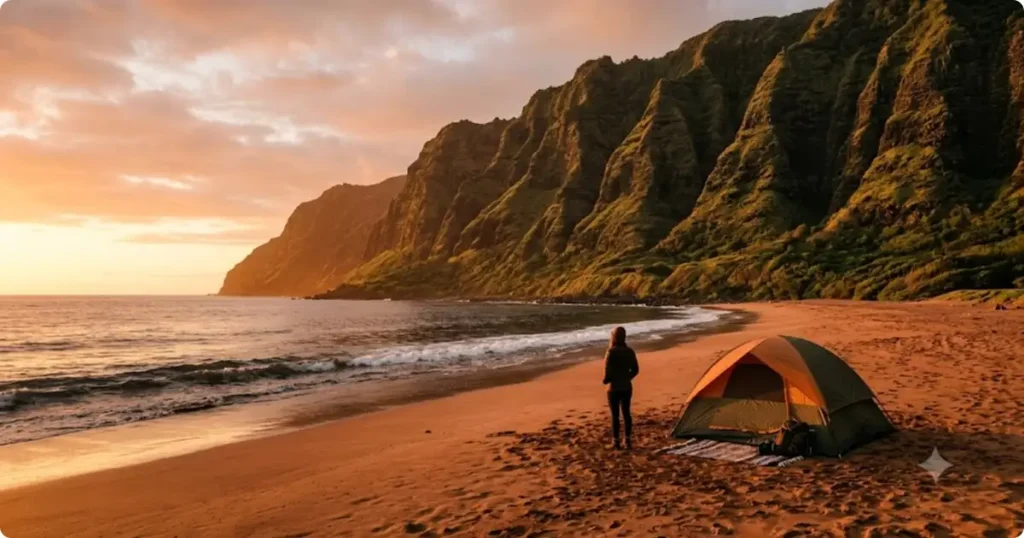
No other Hawaiian island has camping infrastructure like Kauai’s. For travelers willing to sleep under stars, this is where the real budget magic happens.
Na Pali Coast backcountry camping along the Kalalau Trail is one of the most extraordinary camping experiences in the world. Permits run around $20 per person per night and allow camping at Hanakoa Valley (6 miles in) or Kalalau Beach (11 miles in) a remote beach backed by 2,000-foot cliffs with no road access. Permits are competitive and released on a rolling basis through Hawaii’s DLNR reservation system at gostateparks.hawaii.gov. Book as early as the system allows.
Polihale State Park on the remote west side offers beach camping at the western end of the Na Pali Coast. Sites accommodate up to six people, making it excellent value for groups. The access road is unpaved check your rental car agreement before driving it.
Koke’e State Park sits at roughly 4,000 feet elevation in the mountains above Waimea Canyon. Camping here puts you within walking distance of some of the island’s best ridge hikes, with cool temperatures and forest surroundings. Basic cabins are also available through the Koke’e Lodge for travelers who want a roof without paying resort prices.
Anini Beach Park on the North Shore is a county campground right on a mile-long reef-protected beach. The nightly rate is just a few dollars per person with a county permit, making it one of the most affordable overnight options anywhere in Hawaii. Apply for permits through the Kauai County website.
Getting Around Kauai on a Budget
Kauai requires a rental car. The island’s bus system the Kauai Bus runs limited routes between Lihue, Kapa’a, and Poipu, but it doesn’t reach Waimea Canyon, the North Shore trailheads, Polihale, or most beaches worth visiting. Service is infrequent and ends early. For a trip worth taking, a rental car is not optional.
Book rental cars at least eight weeks in advance. Kauai has the smallest rental fleet of any major Hawaiian island, and last-minute bookings can cost two to three times what you’d pay with advance planning. Comparison sites like Discount Hawaii Car Rental aggregate rates across all the major companies at Lihue Airport.
Use a credit card that includes rental car insurance as a benefit. Declining the rental company’s collision coverage and relying on eligible credit card protection instead can cut your daily car cost significantly. Read your card’s terms carefully before declining, as coverage conditions vary.
Gas prices on Kauai run higher than the mainland. Fill up in Lihue or Kapa’a where prices are lowest; west side stations and North Shore stations charge more. The island is small enough that most days won’t require more than 50 miles of driving.
One important geographic note: there is no road connecting the North Shore to the west side. The Na Pali Coast cliffs form a 15-mile gap. Getting from Poipu to Hanalei means driving back through Lihue and Kapa’a roughly 75 minutes each way. Plan your days by region: North Shore days, South Shore days, canyon days. Criss-crossing the island wastes both time and fuel.
Eating Well Without the Resort Price Tag
Best Budget Eats and Plate Lunch Spots
Kauai’s food prices run about 10–15% higher than Oahu due to a smaller supply chain, but the plate lunch culture keeps affordable eating very accessible. A full plate lunch rice, macaroni salad, and a protein like kalua pork, chicken katsu, or laulau runs $11–$14 at most spots and easily constitutes a full meal.
Pono Market in Kapa’a is a local institution: poke by the pound, daily plate lunches, and some of the best local-style food on the island at reasonable prices. Hamura Saimin Stand in Lihue has served Kauai’s signature saimin (a Hawaiian-style noodle soup) since the 1950s, with large bowls starting under $10 and lilikoi (passion fruit) pie as a legendary cheap dessert. Mark’s Place in Lihue offers solid plate lunches in the same price range.
Food trucks are worth seeking out. They operate with lower overhead and typically deliver better value than sit-down restaurants. The Hanalei Taro and Juice Company truck on the North Shore serves poke bowls and taro plates that draw a consistent local crowd a reliable sign of quality and price. On the west side, The Shrimp Station in Waimea makes a useful and affordable lunch stop before or after a Waimea Canyon visit.
For the essential Hawaiian experience of shave ice, Kapa’a and Hanalei both have quality options at a few dollars per serving. Order one with real fruit syrup if you can the difference is noticeable.
Grocery Stores and Farmers Markets
Self-catering is the single most effective budget strategy on Kauai. Even covering just breakfast and lunch from groceries saves $30–$50 per person per day compared to eating out for every meal.
Big Save Markets are the island’s main local grocery chain, with locations in Kapa’a, Koloa, Waimea, and Hanalei. Foodland in Kapa’a and Poipu has a solid poke counter and prepared food section. The best first stop for budget travelers landing at Lihue Airport is Costco just minutes from the terminal to stock up on water, snacks, breakfast supplies, and bulk items at closer-to-mainland prices.
Note: there is no Trader Joe’s, Whole Foods, or Target on Kauai. Stock up on any specialty items before you arrive.
Farmers markets run across the island throughout the week. The Kauai Community Market in Kapa’a (Saturday mornings) is the largest, with local produce, tropical fruit, honey, and prepared food. The Kilauea Farmers Market (Thursday afternoons) and Koloa Farmers Market (Monday at noon) are smaller but excellent for fresh fruit and local goods. Fresh tropical fruit apple bananas, papaya, mango, lilikoi from any market is cheap, satisfying, and far better than anything sold in a mainland grocery store.
A realistic daily food budget for one person, mixing self-catering with one or two local meals: $25–$40.
Free and Low-Cost Things to Do in Kauai
Best Free Beaches
Kauai’s beaches are all publicly accessible and free to enter. What varies is parking, facilities, and conditions.
Poipu Beach Park on the South Shore offers lifeguarded swimming, facilities, and calm water year-round one of the most reliably swimmable beaches in Hawaii. It’s also a popular spot for monk seal sightings. Lydgate Beach Park on the East Shore features a protected wading pool ideal for children and beginners, making it one of the safest places to snorkel on the island.
On the North Shore, Anini Beach Park sits behind a mile-long reef that keeps the water calm even when conditions elsewhere are rough excellent for families and beginner snorkelers. Salt Pond Beach Park on the west side near Hanapepe is calm, uncrowded, and one of the few places in Hawaii where traditional salt harvesting still occurs in the adjacent ponds.
For the more adventurous, Polihale Beach at the far west end of the Na Pali Coast stretches for 17 miles one of the longest undeveloped beaches in Hawaii. It’s remote, often empty, and requires the dirt road access mentioned earlier. The reward is proportional to the effort.
Note: accessing Ke’e Beach and the Kalalau Trailhead at Haena State Park requires a timed entry reservation (small fee per vehicle). These sell out well in advance check the Hawaii DLNR reservation system and book as soon as your dates are confirmed. Walking in without a vehicle requires no reservation.
Hiking Trails That Cost Nothing
Kauai’s trail system is one of its strongest arguments for budget travel. The best hikes on the island charge nothing.
The first two miles of the Kalalau Trail to Hanakapi’ai Beach (entry via Haena State Park) deliver some of the most dramatic coastal scenery in the Pacific towering cliffs, jungle, and ocean views that most visitors travel thousands of miles to see. This section is accessible as a day hike. The full 11-mile trail to Kalalau Beach requires a backcountry permit and multi-day commitment.
In Waimea Canyon, the Canyon Trail and Cliff Trail combination (roughly 3.4 miles round trip) descends into the canyon itself and ends at a waterfall. The Awa’awapuhi Trail (6.2 miles round trip) ends at a narrow ridgeline 2,500 feet above the Na Pali Coast the most dramatic viewpoint accessible by trail on the entire island. Both are free.
Near Kapa’a, Sleeping Giant (Nounou Mountain) is a moderate 4-mile round trip with sweeping East Shore views and a local following that reflects the quality of the experience. Near Poipu, the Maha’ulepu Heritage Trail follows coastal cliffs to ancient lithified sand dunes a geological rarity most visitors miss entirely.
Free Scenic Drives and Lookouts
Kauai rewards drivers as much as hikers.
The drive up Highway 550 to Waimea Canyon is one of the finest scenic drives in the Pacific. Multiple pullouts line the rim with no fee, no gate, no reservation. The canyon stretches 14 miles long and reaches depths of 3,600 feet its comparison to the Grand Canyon is not hyperbole. At the top, Kalalau Lookout delivers an aerial perspective of the Na Pali Coast without any hiking at all.
On the East Shore, Wailua Falls an 80-foot twin waterfall is visible from a roadside lookout. Drive up, photograph, continue. It takes ten minutes and costs nothing. On the North Shore, the Hanalei Valley Lookout just past Princeville reveals taro fields and mountainside waterfalls in a single panoramic view that consistently surprises first-time visitors.
Snorkeling gear purchased once at Costco or Walmart in Lihue and used at multiple beaches across the trip is effectively free after the initial investment. Tunnels Beach (Makua) on the North Shore has the most impressive reef snorkeling on the island when summer conditions are calm. Poipu Beach and Anini Beach are reliable year-round alternatives.
Two Paid Experiences Worth the Splurge
Kauai is built for free experiences, but two paid options earn their cost.
A Na Pali Coast boat tour is the one experience that changes how you understand the island. The Na Pali Coast is Kauai’s defining natural landmark 15 miles of fluted sea cliffs, hidden sea caves, and cascading waterfalls that can only be fully appreciated from the water. Catamaran tours out of Port Allen on the west side typically include snorkeling stops, lunch, and encounters with spinner dolphins. Morning departures offer calmer conditions. This is the one genuinely irreplaceable Kauai experience.
Kayaking the Wailua River to Secret Falls is Kauai’s most rewarding half-day adventure. The Wailua is the only navigable river in Hawaii. Paddle upstream roughly two miles, hike 30 minutes through dense rainforest, and arrive at a 100-foot waterfall and swimming pool that feels entirely removed from the rest of the world. Kayak rentals from outfitters in Wailua start around $35–$40 for the day. Guided tours run more but include equipment, lunch, and local knowledge of the route. Either way, it delivers.
Everything else on Kauai’s paid activity menu helicopter tours, ziplines, ATV tours is optional and easy to skip without missing the essential island experience.
Kauai Budget Tips for Couples
Kauai works particularly well for couples on a budget, because most of its costs split naturally.
A rental car costs the same whether one or two people ride in it. A condo kitchen serves two as easily as one. Camping permits are per person but sites fit two comfortably. Kayak rentals are typically priced per boat, which a couple shares. The one-cost-for-two-people structure means that Kauai’s per-person daily cost for a couple is meaningfully lower than for a solo traveler.
The island’s setting does the romantic heavy lifting for free. Sunrise from Kapa’a’s beachfront path. Sunset at Salt Pond Beach with no crowds. The Awa’awapuhi Trail ridgeline with a packed lunch. A swim at the Secret Falls after paddling there yourselves. These experiences require almost no spending.
For couples looking for one special evening, eating dinner at a mid-range restaurant in Kapa’a or Poipu is far more affordable than anything in a resort. The Kauai Beer Company in Lihue offers a relaxed setting with local beers and solid pub food at prices that won’t shock the budget. A nicer dinner at places like Merriman’s Fish House in Poipu is a meaningful splurge that stays within reason.
Common Mistakes That Blow a Kauai Budget
Basing yourself on the North Shore. Princeville and Hanalei are stunning, but they’re also the most expensive area to stay and the most rain-prone from October through March. Budget travelers who fall in love with the North Shore scenery and commit to accommodation there often pay 40–60% more per night than they would in Kapa’a, for a base that’s further from most activities. Stay centrally in Kapa’a and drive north for day trips.
Not booking the Haena State Park reservation. Since the park moved to a timed entry system, visitors without a vehicle reservation are turned away at the gate. The reservation is inexpensive and available through Hawaii’s state parks system, but it sells out weeks in advance. Missing it means missing Ke’e Beach and the Kalalau Trailhead two of the island’s signature experiences.
Assuming helicopter tours are a must. Helicopter tours of the Na Pali Coast and Waimea Canyon are spectacular, but they run $250–$350 per person. The Kalalau Lookout at the top of Koke’e Road delivers a Na Pali view for free. A boat tour delivers the full coast from water level for far less. Skip the helicopter unless it’s the experience you’ve specifically planned around.
Not reserving a rental car early. Kauai has the smallest rental fleet of any major Hawaiian island. Waiting until two or three weeks before arrival routinely results in paying double the advance-booking rate or finding nothing available at all during peak season.
Planning activities across the island on the same day. The North Shore and the west side are not accessible from each other without driving through the center of the island. Trying to visit the North Shore beaches and Waimea Canyon on the same day adds two hours of unnecessary driving. Group activities by region and the island becomes efficient and relaxed.
Skipping Waimea Canyon. Some visitors fill their itinerary with paid tours and never make the drive up to Waimea Canyon. It’s free, it’s one of the most impressive natural formations in Hawaii, and the drive takes less than an hour from Lihue. There is no paid experience on the island that surpasses what you see from the canyon rim.
Final Verdict
Kauai’s reputation as an expensive destination obscures a more accurate truth: its best experiences cost nothing. The Na Pali Coast, Waimea Canyon, the Kalalau Trail, the island’s beaches and waterfalls all of them are free to access and collectively constitute the reason most people visit.
Where Kauai does cost money accommodation, rental car, food the right choices close the gap considerably. The East Shore base keeps accommodation affordable. Early car booking prevents the most punishing price spikes. Self-catering and plate lunch culture make daily food spending manageable.
Couples and solo travelers willing to camp, cook, and hike can experience the full Kauai for $75–$100 per person per day. Those who prefer a condo and occasional restaurant meals can do it comfortably for $155–$200. Neither requires compromise on what Kauai actually is a wild, largely undeveloped island where the mountains and the coast do all the work.
The Garden Isle rewards people who come for the island itself. That, as it turns out, is the most affordable Kauai itinerary of all.
