

Under “The Six Visitable Hawaiian Islands”: none intro section only Under Oahu: What Oahu Is Known For / Who Should Visit Oahu Under Maui: What Maui Is Known For / Who Should Visit Maui Under Kauai: What Kauai Is Known For / Who Should Visit Kauai Under The Big Island: What the Big Island Is Known For / Who Should Visit the Big Island Under Molokai: What Molokai Is Known For / Who Should Visit Molokai Under Lanai: What Lanai Is Known For / Who Should Visit Lanai Under How the Hawaiian Islands Differ: Geography and Weather Patterns / Vibe and Development Level / Activities and Landscapes Under Which Island to Visit First: (prose, no H3 needed)
Most people know Hawaii as a single paradise. The reality is a chain of islands strung across the North Pacific, each shaped by different volcanic forces, different histories, and a different version of what island life looks and feels like.
If you have searched “hawaiian islands explained” and found yourself buried in trip-planning guides that skip straight to hotel recommendations, this article takes a different approach. We start at the beginning with the geography, the names, and what makes each island its own place before getting to the question of where to go.
How Many Islands Are in Hawaii and Why the Answer Is Complicated
Hawaii is not one island. It is an archipelago a long chain of islands, reefs, atolls, and seamounts stretching roughly 1,500 miles across the central North Pacific Ocean.
The full Hawaiian archipelago contains 137 islands, islets, and atolls. That number sounds large because it is. Most of those 137 are tiny, uninhabited, and not what anyone means when they ask how many islands Hawaii has.
The number most travelers are looking for is eight. Hawaii has eight main islands, which are the larger, geologically younger islands at the southeastern end of the chain. These are the islands people actually visit, live on, and talk about when they discuss Hawaii.
Of those eight main islands, six are open to visitors. Two Niihau and Kaho’olawe are off-limits to the general public, each for different reasons explained later in this article.
So the honest answer to “how many islands are in Hawaii” depends on what you mean. One hundred thirty-seven in total. Eight main islands. Six you can actually visit.
The Names of the Hawaiian Islands
| Island | Nickname | Position (NW to SE) | Open to Visitors |
|---|---|---|---|
| Niihau | The Forbidden Isle | 1st | No — privately owned, restricted access |
| Kauai | The Garden Isle | 2nd | Yes |
| Oahu | The Heart of Hawaii / The Gathering Place | 3rd | Yes |
| Molokai | The Friendly Isle | 4th | Yes |
| Lanai | The Pineapple Isle | 5th | Yes |
| Maui | The Valley Isle | 6th | Yes |
| Kaho’olawe | — | 7th | No — restricted, held in state trust |
| Hawaii (Big Island) | The Big Island / Island of Discovery | 8th | Yes |
The eight main Hawaiian islands, listed from northwest to southeast, are:
Niihau, Kauai, Oahu, Molokai, Lanai, Maui, Kaho’olawe, and the Island of Hawaii (commonly called the Big Island).
Each island has a Hawaiian name that carries meaning. Kauai translates roughly to “a calm place.” Oahu is sometimes interpreted as “the gathering place.” Maui was named for the demigod Maui, a central figure in Polynesian mythology. The Big Island shares its name with the state itself Hawaii which most scholars connect to the name of the legendary Polynesian homeland, Hawaiki.
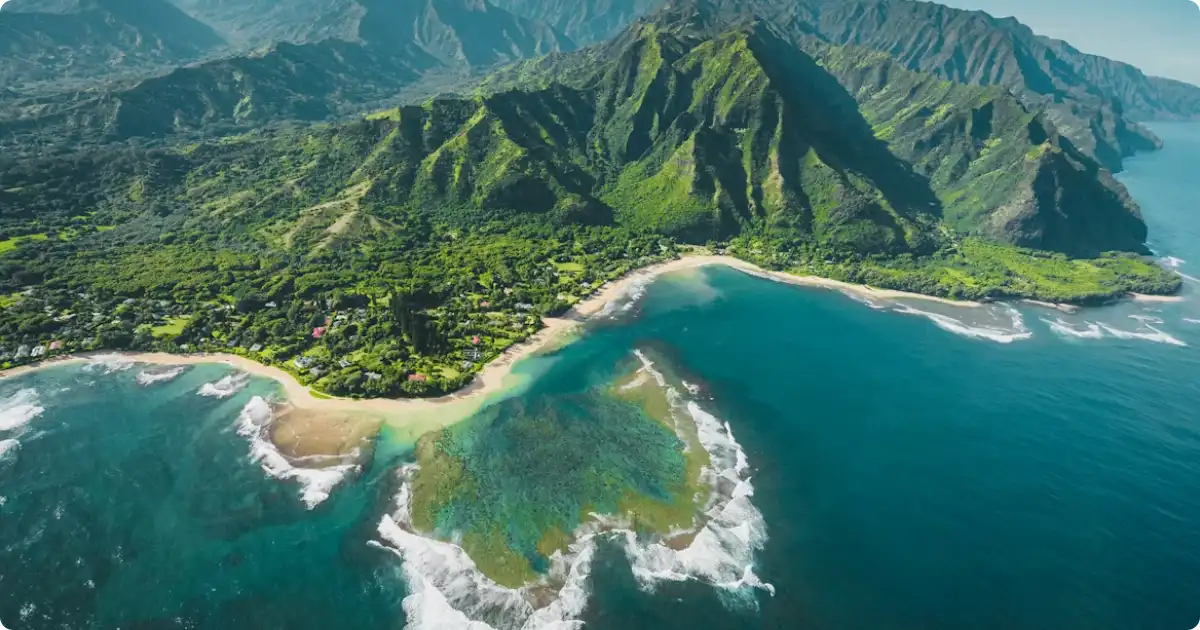
The islands were formed in sequence by a volcanic hotspot deep beneath the Pacific plate. As the plate moves slowly to the northwest over millions of years, new islands form above the hotspot and older ones drift away. The Big Island sits directly over the hotspot today and is still actively growing. Kauai, the oldest of the main islands, has drifted far enough from the hotspot that its volcanic activity ended long ago which is why its lava rock has had millions of years to erode into lush valleys and sandy beaches.
The Six Visitable Hawaiian Islands
For travelers, Hawaii means six islands: Oahu, Maui, Kauai, the Big Island, Molokai, and Lanai. Each has its own commercial airport, its own personality, and its own reasons to visit.
The four most visited Oahu, Maui, Kauai, and the Big Island are often called the four main islands of Hawaii. They receive the overwhelming majority of tourists, have the most developed infrastructure, and offer the widest range of accommodations and activities.
Molokai and Lanai are smaller, quieter, and far less developed. They attract travelers specifically looking for an experience that feels removed from mainstream tourism.
Oahu: The Heart of Hawaii
Oahu is the most populated island in Hawaii and, by a significant margin, the most visited. It is home to Honolulu, the state capital, and to Waikiki the most recognizable stretch of beach in the entire Pacific.
With about one million permanent residents, Oahu holds roughly three-quarters of Hawaii’s total population. That density gives it a character unlike any other island: a real city skyline, genuine traffic, a diverse local culture, and a range of neighborhoods that have nothing to do with tourism.
What Oahu Is Known For
Oahu is known for Waikiki Beach, Pearl Harbor, and the North Shore surf scene. These three draw more visitors than anything else on the island, but they represent only a fraction of what Oahu offers.
Pearl Harbor and the USS Arizona Memorial are among the most visited historical sites in the United States. The North Shore, particularly the town of Haleiwa and the breaks at Pipeline and Sunset Beach, is recognized globally as the surfing capital of the world. Winter swells on the North Shore produce some of the largest and most powerful waves on earth, drawing professional surfers and spectators from everywhere.
Waikiki sits in the heart of Honolulu and offers a long crescent of beach lined with hotels, restaurants, and surf schools. While it is undeniably touristy, it is also genuinely beautiful backed by the iconic Diamond Head volcanic crater, which can be hiked in a few hours for sweeping views of the coastline.
Beyond these landmarks, Oahu has a strong local food culture rooted in its Japanese, Chinese, Korean, Filipino, and Native Hawaiian communities. The windward side of the island towns like Kailua and Kaneohe offers a quieter, more residential slice of life, with some of the most beautiful beaches on the island and far fewer visitors.
Who Should Visit Oahu
Oahu is the best starting point for first-time visitors to Hawaii. It is the easiest island to reach, has the widest range of accommodation budgets, and offers the most variety in a single destination. It also gives visitors the clearest sense of Hawaii’s multicultural identity something harder to find on more resort-oriented islands.
Maui: The Valley Isle
Maui is Hawaii’s second-largest island and widely regarded as one of the most beautiful places in the world. It draws travelers looking for luxury, natural spectacle, and a balance of resort comfort with genuine outdoor adventure.
The island takes its name from the demigod Maui, a trickster figure in Polynesian mythology credited with pulling the Hawaiian islands from the sea. Whether or not you find that poetic, the island lives up to legendary status.
Maui was devastated by the August 2023 wildfires that destroyed much of the historic town of Lahaina and caused significant loss of life. Lahaina had been the original capital of the Hawaiian Kingdom and one of the most storied towns in the Pacific. As of this writing, parts of Maui continue to recover and rebuild. Travelers planning a visit should check current conditions for specific areas of West Maui, though the rest of the island its beaches, national parks, and resort areas continues to welcome visitors.
What Maui Is Known For
Maui is known for Haleakala National Park, the Road to Hana, humpback whale watching, and luxury resort areas like Wailea and Kaanapali.
Haleakala is a massive shield volcano whose summit rises more than 10,000 feet above sea level. The crater at the top is vast enough to swallow Manhattan. Sunrise at the summit is one of the most commonly cited bucket-list experiences in Hawaii cold, extraordinary, and requiring advance reservations.
The Road to Hana is a 64-mile route along Maui’s northeastern coast, winding through rainforest, past waterfalls, and along dramatic ocean cliffs. It is not a drive you rush. Most travelers take a full day, stopping at bamboo forests, black sand beaches, and roadside fruit stands along the way.
Maui is the primary breeding and calving ground for North Pacific humpback whales, which arrive in Hawaiian waters during winter months. Whale-watching excursions from Maui’s harbors are among the most reliable places on earth to see humpbacks in the wild.
Who Should Visit Maui
Maui suits couples, honeymooners, and travelers willing to pay for a higher level of comfort. It also works well for adventurous travelers who want the option of world-class hiking or diving alongside resort amenities. Anyone drawn to dramatic volcanic landscapes, marine wildlife, or scenic drives will find Maui deeply satisfying.
Kauai: The Garden Isle
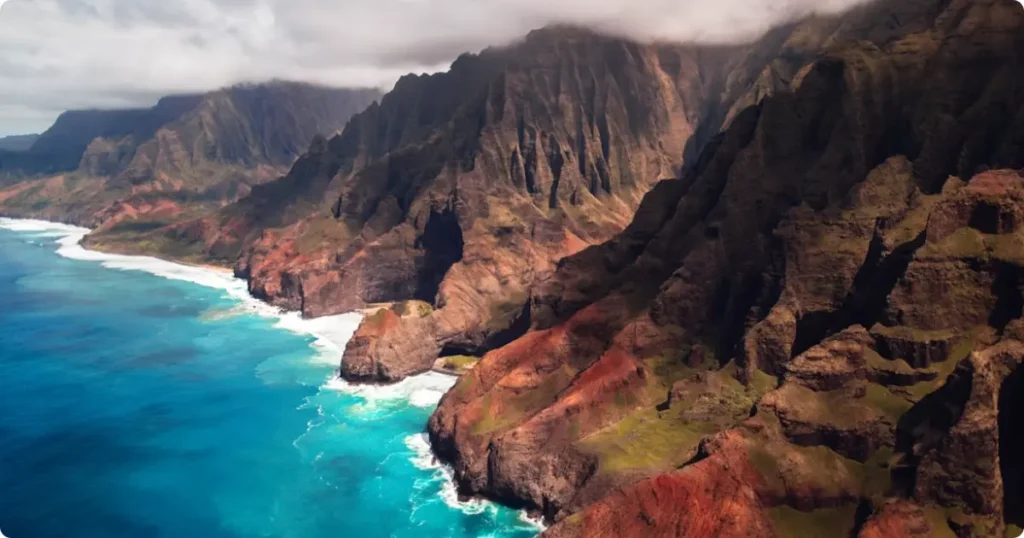
Kauai is the oldest of the main Hawaiian islands and the most physically dramatic. Millions of years of erosion have carved its volcanic rock into fluted sea cliffs, deep river canyons, and jungle-covered ridges that drop steeply into the Pacific.
The island has a resident population of around 73,000 making it small even by Hawaiian standards and roughly 97% of its land is undeveloped. That ratio is not an accident. Kauai has strict building height restrictions and limited resort development by design. Visitors come here precisely because it feels less built up.
What Kauai Is Known For
Kauai is known for the Na Pali Coast, Waimea Canyon, and some of the most demanding hiking trails in the Hawaiian Islands.
The Na Pali Coast is a 17-mile stretch of sea cliffs along the island’s northwest shore, completely inaccessible by road. The cliffs rise up to 4,000 feet straight out of the ocean. The only ways to experience Na Pali are by helicopter, by boat, or on foot along the Kalalau Trail an 11-mile cliffside route considered one of the most spectacular and strenuous hikes in the United States.
Waimea Canyon, on the western side of the island, stretches 14 miles long and reaches depths of more than 3,600 feet. It is often called the Grand Canyon of the Pacific. The comparison is not hyperbole. The canyon’s reds and greens are extraordinary, and its overlooks offer some of the most dramatic views anywhere in Hawaii.
Kauai’s beaches tend to be sandy a result of its age and the volume of erosion and include both calm, family-friendly bays on the south shore and powerful surf beaches on the north shore.
Who Should Visit Kauai
Kauai is the island for hikers, nature lovers, and anyone who wants Hawaii with the volume turned down. It is quieter than Oahu, less resort-oriented than Maui, and genuinely wild in a way that feels earned. Travelers who want solitude, dramatic scenery, and access to serious trails will feel at home here.
The Big Island: Hawaii Island
The Big Island is simply large. At nearly 4,030 square miles, it is larger than all the other Hawaiian islands combined. Despite its size, it has one of the smallest permanent populations of the main islands around 200,000 people which gives it a spacious, unhurried quality that surprises many first-time visitors.
The Big Island is geologically the youngest main island and the only one with currently active volcanoes. It sits directly over the Pacific hotspot that created the entire Hawaiian chain, and it is still growing lava from Kilauea has added hundreds of acres of new land to the island’s coastline in recent decades.
What the Big Island Is Known For
The Big Island is known for Hawaii Volcanoes National Park, diverse climate zones, black sand beaches, manta ray night dives, and stargazing from Mauna Kea.
Hawaii Volcanoes National Park is the island’s signature attraction. The park contains two of the world’s most active volcanoes Kilauea and Mauna Loa. The volcanic landscapes inside the park range from lava tube caves to steam vents to hardened lava fields that look like the surface of another planet. When conditions allow, visitors can see active lava flows reshaping the coastline in real time.
Mauna Kea rises to 13,796 feet above sea level, making it the tallest mountain in the world when measured from its base on the ocean floor. The summit is above 40% of Earth’s atmosphere, which makes it one of the best places on the planet for astronomical observation. Several major international observatories are located at the summit, and tours allow visitors to stargaze from the visitor center at around 9,000 feet.
The Big Island’s climate zones are another point of distinction. Because of its size and varied elevation, the island contains 11 of the world’s 14 climate zones from tropical rainforest on the east side to arid lava desert on the west, from alpine tundra near the summit of Mauna Kea to the lush Kohala Coast in the north.
Who Should Visit the Big Island
The Big Island suits travelers driven by geology, astronomy, or a sense of raw natural wonder. It also works well for those who want a quieter pace combined with serious outdoor exploration. The west side particularly the Kohala Coast and Kona area offers resort-quality beaches and amenities alongside proximity to the volcanic landscapes of the east.
Molokai: The Friendly Isle
Molokai is one of Hawaii’s best-kept secrets and many of its residents want it to stay that way. The island has no traffic lights, no shopping malls, and no large resorts. Tourism infrastructure is minimal by design. The community has consistently resisted large-scale development, and that resistance has preserved something genuinely rare: a Hawaiian island that still looks and feels like it belongs to Hawaiian people.
Molokai has the highest percentage of Native Hawaiian residents of any island in the state. Its culture is not performed for tourists it is lived daily. Visitors are welcome, but the pace and the priorities belong to the community.
What Molokai Is Known For
Molokai is known for the world’s tallest sea cliffs, Kalaupapa National Historical Park, and an authentic Native Hawaiian culture largely untouched by mass tourism.
The sea cliffs on Molokai’s north shore reach heights of more than 3,900 feet the tallest in the world. They are largely inaccessible, which only adds to their power. Kalaupapa is a remote peninsula at the base of these cliffs, reachable only by a steep trail, by small plane, or by a guided mule ride down a 1,600-foot descent. It was a settlement established in 1866 to isolate Native Hawaiians diagnosed with Hansen’s disease (leprosy), and it operated as a colony for over a century. Today it is a National Historical Park and a place of profound, complex history.
Who Should Visit Molokai
Molokai is for travelers who want the real Hawaii over the curated version. It rewards patience, cultural curiosity, and a willingness to travel without a packed itinerary. It is not suited to visitors seeking luxury, nightlife, or tourist amenities. But for those who visit on its own terms, it tends to be memorable in ways that resort islands rarely are.
Lanai: The Pineapple Isle
Lanai is Hawaii’s smallest publicly accessible island just 18 miles long and 13 miles wide. It was once the world’s largest pineapple plantation, owned and operated by Dole. Today, the vast majority of the island is privately owned by tech entrepreneur Larry Ellison, and its economy has shifted from agriculture to high-end tourism.
Despite its unusual ownership situation, Lanai is open to visitors and home to a small permanent community, many of whose families have lived there for generations.
What Lanai Is Known For
Lanai is known for luxury seclusion, otherworldly landscapes, and a dramatic contrast between its polished resorts and its rugged interior.
The Garden of the Gods known in Hawaiian as Keahiakawelo is a surreal landscape of red and orange lava boulders scattered across an open plain in the island’s interior. It looks nothing like the rest of Hawaii. At sunset, the rocks seem to glow.
Hulopo’e Bay on the south shore is one of the most pristine marine reserves in Hawaii, with calm, clear water and consistent sightings of spinner dolphins and sea turtles. Sweetheart Rock a dramatic spire of lava rising from the water near the bay is one of the most photographed formations in the islands.
Lanai’s interior can be explored by 4×4. The Munro Trail climbs along the island’s central ridge, and on clear days offers views of five other Hawaiian islands simultaneously.
Who Should Visit Lanai
Lanai suits travelers seeking genuine seclusion and a resort experience without crowds, or adventurous visitors who want to explore an unusual landscape well off the tourist trail. It is not a budget destination, and its small size means it works best as part of a multi-island trip rather than a primary destination.
The Two Islands You Cannot Visit
Two of Hawaii’s eight main islands are off-limits to the general public.
Niihau, located about 18 miles southwest of Kauai, is privately owned by the Robinson family, who purchased it from the Kingdom of Hawaii in 1864. The island is home to a small community of Native Hawaiians who live a largely traditional lifestyle with limited outside contact. The Robinsons have maintained a strict restricted-access policy for generations, and visits by outsiders require explicit permission from the family. It is sometimes called the Forbidden Isle.
Kaho’olawe, located just southwest of Maui, was used as a military bombing range by the United States Navy from World War II until 1990. The island sustained significant damage from decades of ordnance testing, and large portions remain contaminated. It was returned to the state of Hawaii in 1994 and is now held in trust for future Native Hawaiian generations. Access is restricted to authorized groups, primarily for cultural and environmental restoration work.
How the Hawaiian Islands Differ From Each Other
Understanding the differences between the Hawaiian islands requires looking at three things: geography and weather, development level and vibe, and the type of activities and landscapes on offer.
Geography and Weather Patterns
All Hawaiian islands share a fundamental weather pattern driven by the Northeast Trade Winds. The windward side facing northeast receives more rainfall and tends to be lush and green. The leeward side sheltered from the trades is drier, sunnier, and where most beach resorts are built. This pattern holds across every island, though its effects vary significantly by island age and terrain.
Kauai, the oldest and most eroded island, receives some of the heaviest rainfall on earth on its windward peaks Mount Waialeale is among the wettest spots on the planet while its south shore remains reliably sunny. The Big Island, the youngest and tallest, creates its own weather systems and contains more climate extremes than any other island.
Vibe and Development Level
Oahu is urban, energetic, and culturally diverse. Maui leans toward upscale resort tourism with genuine adventure available off the beaten path. Kauai is rural, quiet, and deeply oriented toward nature. The Big Island is spacious and unhurried, with a rugged, exploratory quality. Molokai is intentionally undeveloped and community-driven. Lanai is either secluded luxury or wild backcountry, depending on which part of the island you explore.
None of these islands are interchangeable. A traveler disappointed by Waikiki’s crowds might love Kauai’s empty valleys. Someone who finds the Big Island too remote might thrive in Maui’s mix of resort comfort and outdoor access.
Activities and Landscapes
| Island | Vibe and Development | Known For | Best For |
|---|---|---|---|
| Oahu | Urban, energetic, culturally diverse | Surfing culture, Pearl Harbor, city life | First-time visitors, history, nightlife |
| Maui | Upscale resort tourism with adventure access | Haleakala, Road to Hana, whale watching | Couples, honeymooners, active travelers |
| Kauai | Rural, quiet, nature-oriented | Na Pali Coast, Waimea Canyon, hiking | Hikers, nature lovers, solitude seekers |
| Big Island | Spacious, unhurried, rugged | Active volcanoes, Mauna Kea, climate zones | Geology, stargazing, wide-open exploration |
| Molokai | Intentionally undeveloped, community-driven | World’s tallest sea cliffs, Kalaupapa, Native Hawaiian culture | Cultural immersion, authentic island life |
| Lanai | Secluded luxury or wild backcountry | Garden of the Gods, Hulopo’e Bay, Munro Trail | Seclusion, 4×4 exploration, upscale escapes |
Each island leads with something different. Oahu leads with surfing culture, history, and city life. Maui leads with volcanic hiking, whale watching, and the Road to Hana. Kauai leads with the Na Pali Coast and canyon hiking. The Big Island leads with active volcanoes and astronomical observation. Molokai leads with cultural immersion and sea cliff grandeur. Lanai leads with seclusion and unusual terrain.
Snorkeling and diving are excellent across all six islands, with particularly strong reputations for Maui’s Molokini Crater, the Big Island’s Kealakekua Bay, and Lanai’s Hulopo’e Bay.
Which Hawaiian Island Should You Visit First
For most travelers visiting Hawaii for the first time, the decision comes down to Oahu, Maui, or Kauai with the Big Island as a strong fourth option for those drawn to geology and wide-open landscapes.
Oahu is the right choice if you want the widest range of experiences, the most budget flexibility, and a genuine connection to the culture and history of Hawaii. It is the easiest island to navigate and the most practical base for exploring.
Maui is the right choice if you are comfortable spending more and want a polished experience alongside natural spectacle. Honeymooners and couples tend to gravitate here for good reason.
Kauai is the right choice if hiking, wilderness, and landscape photography are your priorities and you are prepared for a destination that prioritizes nature over amenities.
The Big Island is the right choice if volcanic landscapes, stargazing, or the idea of watching geology happen in real time sounds compelling. It takes more planning to explore well, but the payoff is unique.
Many experienced Hawaii travelers recommend visiting two islands on a single trip pairing a busier island with a quieter one. Inter-island flights are short, frequent, and relatively straightforward, making multi-island itineraries practical even for trips of 10 days or less.
Final Verdict
The Hawaiian Islands are not different versions of the same destination they are genuinely different places that happen to share a geography, a language, and a spirit. Knowing which island is which, what each is known for, and how they differ from one another is the foundation for any good Hawaii trip, whether you are planning your first visit or your fifth.
Oahu is where the state’s history, culture, and urban energy converge. Maui balances natural drama with resort comfort. Kauai is the wild, ancient one. The Big Island is the living laboratory of geology. Molokai is the most authentically Hawaiian. Lanai is the most secluded. And two islands Niihau and Kaho’olawe remind us that not every part of paradise is open to visitors, and that some of the most important places in Hawaii belong to the land and its people first.
Start with the island that matches what you actually want from the trip. The chain is long enough, and varied enough, that there is no wrong answer only the wrong island for the wrong traveler.
