
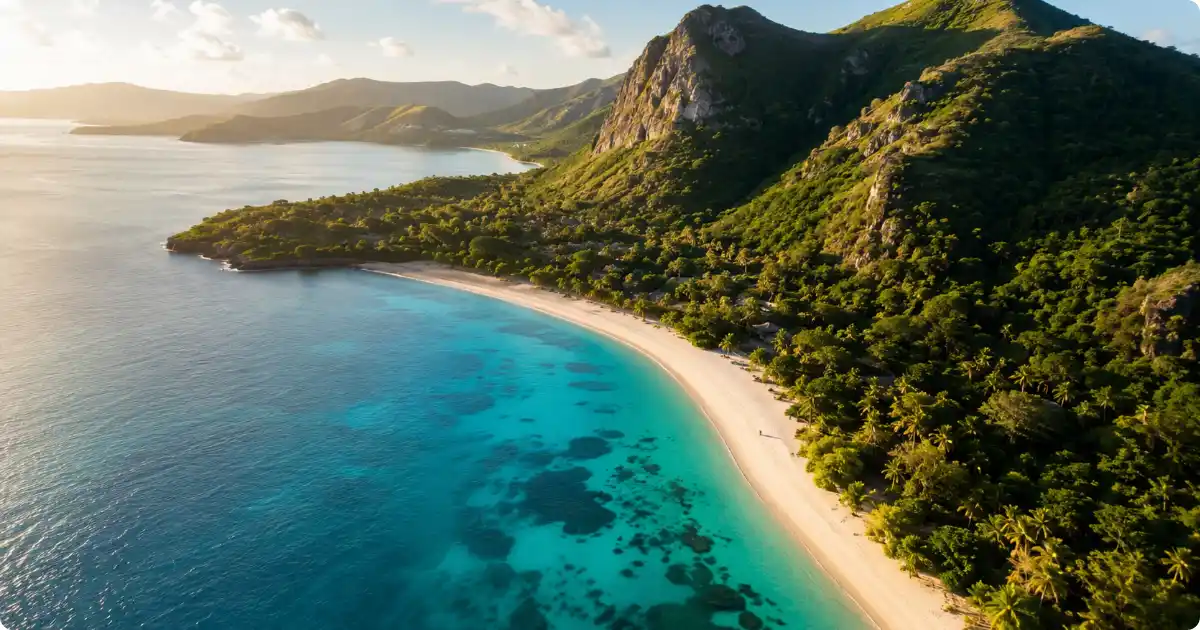

Every year, millions of travelers put Hawaii on their list and then spend months trying to figure out where to start. Which island? How long? How much? The planning alone can feel overwhelming before you even land.
The good news is that planning a trip to Hawaii is easier than it looks, as long as you approach it in the right order. The biggest mistake first-timers make is jumping straight to activities and accommodation before answering the foundational questions: which island fits what you’re looking for, and how much time do you actually have?
This guide walks through every step in the right sequence, so by the time you finish reading, you’ll have a clear plan rather than a longer list of browser tabs.
Which Hawaiian Island Should You Visit First?
| Island | Best For | Signature Draw | Development Level | Minimum Stay |
|---|---|---|---|---|
| Oahu | First-timers, city and beach mix | Waikiki, Pearl Harbor, North Shore surfing | Highest | 7 days |
| Maui | Couples, scenic trips, whale watching | Road to Hana, Haleakala sunrise | High | 7 days |
| Kauai | Hikers, nature lovers, seclusion | Na Pali Coast, waterfalls, Waimea Canyon | Low | 7 days |
| Big Island | Adventure travelers, volcano landscapes | Hawaii Volcanoes National Park, Mauna Kea | Moderate | 5–7 days |
Choosing an island is the most important decision you’ll make for your Hawaii trip. Each island has a distinct character, and the right choice depends entirely on what kind of experience you’re after not just which name sounds most familiar.
Most visitors to Hawaii choose between four main islands: Oahu, Maui, Kauai, and the Big Island. Two smaller islands, Lanai and Molokai, are worth knowing about but rarely the right fit for first-timers.
Oahu: The Best All-Around First Island
Oahu is where most first-timers should start. It’s the most visited island for good reason: it offers the widest range of experiences in one place, from the famous beaches of Waikiki and the historic Pearl Harbor memorial to world-class surfing on the North Shore and excellent hiking throughout the island’s interior.
Honolulu, Hawaii’s capital city, sits on Oahu and gives the island a level of infrastructure restaurants, transportation options, shops, and entertainment that no other island can match. For travelers who want flexibility and variety, that matters.
Oahu also has the most international and mainland US flight connections, making it the most practical entry point. If you’re planning your first visit to Hawaii and have only one week, Oahu alone can fill it comfortably without feeling like you’ve missed anything essential.
One important note: Waikiki, the hotel district on Oahu’s south shore, can feel very crowded and commercialized. That’s not a reason to avoid it the beach is genuinely beautiful and the convenience is real but travelers who prioritize seclusion may find the area less relaxing than expected.
Maui: The Romantic and Scenic Choice
Maui is the second most visited island and the top choice for couples and honeymoons. It strikes a strong balance between natural scenery and developed amenities, meaning you can drive the Road to Hana a winding coastal route through waterfalls, bamboo forests, and black sand beaches and still return to a well-equipped resort town for dinner.
The island is also home to Haleakala, a dormant volcano where visitors can watch the sunrise above the clouds from a crater summit. It’s one of the more memorable experiences in all of Hawaii, but it requires an advance reservation and an early start.
Maui tends to attract travelers who want beauty and relaxation in equal measure. It’s a better fit than Oahu for those who specifically want a quieter, more scenic trip, and it’s particularly strong for whale watching between December and April.
Kauai: The Garden Isle for Nature Lovers
Kauai is the least developed of the four main islands and, for many visitors, the most visually stunning. The Na Pali Coast a series of dramatic green sea cliffs dropping straight into the ocean is unlike anything else in the Hawaiian islands and is best seen by helicopter or boat.
The island is smaller and has fewer tourist amenities than Oahu or Maui, which is either a strength or a limitation depending on what you’re looking for. For hikers, kayakers, and travelers who want to feel genuinely off the beaten path, Kauai delivers. For those who want a resort vacation with built-in entertainment and dining variety, it may feel limiting.
Kauai’s driving distances can also be deceptive. A single main road runs the perimeter, and it doesn’t complete a loop, meaning you can’t drive all the way around the island. Getting from the north shore to the south shore takes longer than the map suggests.
Big Island: Best for Adventure and Diversity
The Big Island officially named Hawaii is the largest island in the chain and the most geologically diverse. It’s home to Hawaii Volcanoes National Park, where active volcanic activity has created lava fields, lava tubes, and, in some periods, visible lava flows. The landscapes shift dramatically from black lava coastlines on the west to dense rainforest on the east, and the summit of Mauna Kea reaches snow-capped elevations above 13,000 feet.
For first-timers, the Big Island makes most sense if you have a specific reason to prioritize it active volcano landscapes, manta ray night snorkeling, or stargazing from Mauna Kea. It’s a large island that rewards more time and more driving, so plan for at least five to seven days to see it properly.
Smaller Islands: Lanai and Molokai
Lanai is a small, privately owned island known for luxury and seclusion. The two resorts there position it as a high-end escape. It works well as a day trip from Maui by ferry or catamaran, but as a base for a full Hawaii first visit, it’s a specialized choice.
Molokai is the least visited of the accessible Hawaiian islands and the most rural. It has very limited accommodation, few organized tourist facilities, and a slow pace that attracts travelers specifically looking for an unchanged, local Hawaii experience. It’s worth considering for return visits or for travelers who actively want to avoid the more developed islands.
How Many Days Do You Need in Hawaii?

The most common question first-time visitors ask after choosing an island is how much time to book. The answer depends on how many islands you plan to visit and how much of each you want to see.
One Island: How Long to Stay
For a single island, the recommended minimum is seven days. Hawaii is a long journey from the US mainland typically five to six hours from the West Coast and ten or more from the East Coast so a short visit rarely does it justice. The first day often involves adjustment and travel fatigue, and a week gives you enough time to see the major highlights, fit in a few activities, and still have unhurried beach days.
Six to eight days is the sweet spot for most travelers. It’s enough time to explore the island without feeling rushed, with room to adapt to weather changes or reschedule an activity.
For families with young children, build in lighter days. Full itineraries with back-to-back activities become exhausting quickly, and some of the best Hawaii moments a morning on an empty beach, a slow breakfast with a view don’t appear on any highlight list.
Two Islands: Is Island-Hopping Worth It?
Island-hopping is a popular idea, and it’s very doable, but first-timers often underestimate how much time it consumes. There are no ferries between the main islands (except from Maui to Lanai), so moving between islands means booking a flight, going through airport security, and handling car rental returns and pickups. A 20-minute flight can easily take four hours of your day when you account for the full process.
The practical rule is to allow at least four to five days per island. So a two-island trip works best on ten days minimum, and fourteen is more comfortable. If you have fewer than ten days, staying on one island and exploring it deeply is almost always more satisfying than rushing between two.
The most common two-island pairing is Oahu and Maui, or Oahu and Kauai. Fly into Oahu for the variety and energy, then move to a quieter island for the second half of the trip.
When Is the Best Time to Visit Hawaii?
Hawaii’s climate is warm and relatively stable year-round. Temperatures at sea level stay between roughly 75°F and 85°F in most months, which means the “best” time to visit depends more on what you want to do and how much you want to spend than on avoiding bad weather.
Peak Season vs. Off-Season
Peak season runs from mid-December through March and again in June through August, driven by US school holidays and the appeal of Hawaii winters. These are the most crowded and most expensive periods, with higher accommodation rates and longer queues at popular sites.
The shoulder months April, May, September, and October offer a useful balance: fewer crowds, lower prices, and weather that remains very good. These are often the most practical windows for first-time visitors who have flexibility on travel dates.
Best Time for Whale Watching
Humpback whales migrate to Hawaiian waters from roughly December through May, with peak sightings between January and March. Maui’s waters, particularly around the Auau Channel, are among the most active whale-watching areas. If whale watching is a priority, plan your visit within this window and book a tour early.
Best Time for Snorkeling and Calm Seas
Ocean conditions are generally calmer and clearer in summer, making June through September the strongest window for snorkeling and swimming. North shore beaches tend to have large surf in winter spectacular to watch, but not suitable for casual swimming. South shore beaches are calmer in winter and typically safer for snorkeling outside of summer.
How Much Does a Trip to Hawaii Cost?
Hawaii is one of the more expensive domestic destinations in the US, and the cost surprises many first-time visitors. Understanding where the money goes before you start booking helps avoid underbudgeting.
Flights to Hawaii
Flight costs vary significantly by departure city. Travelers flying from the US West Coast particularly Los Angeles, San Francisco, or Seattle have access to the most affordable and frequent routes. Flights from the East Coast are longer and often more expensive. UK travelers will connect through a US hub, typically on the West Coast, adding both time and cost to the overall journey.
Booking several months in advance is the most reliable way to secure better fares. Hawaii flights fill quickly during peak periods.
Where to Stay: Resorts, Condos, and Vacation Rentals
Accommodation is typically the largest expense. Full-service resort hotels on Maui and Oahu frequently price well above $400 per night, and beachfront resorts can run far higher. Budget-tier hotels and inn-style accommodation are available but limited on the more popular islands.
Many families and longer-stay visitors find that renting a condo with a kitchen is the most cost-effective approach. Condo rentals often provide resort amenities pools, beach access at a lower per-night cost, and having a kitchen significantly reduces food spending. Platforms like VRBO carry a large selection across all four main islands.
One important note: vacation rentals in Hawaii are subject to regulation, particularly on Oahu. When booking, verify that the listing has proper permits. Illegal vacation rentals do operate and carry the risk of last-minute cancellation.
Food, Car Rentals, and Activities
Food in Hawaii is expensive relative to the US mainland because so much of it is shipped in. Eating out at restaurants three times a day will add up quickly. A practical strategy is to use a condo kitchen for breakfasts and some lunches, eat from food trucks which are widespread and usually excellent for casual meals, and save restaurant budgets for a few standout dinners.
A rental car is essential on most islands. Oahu has a functional public bus system and rideshare availability, but on Maui, Kauai, and the Big Island, a car is the only practical way to reach most beaches and attractions. Book rental cars well in advance, especially during peak periods inventory runs short.
Activities vary widely in cost. Luaus typically run from $150 to $350 per person. Helicopter tours, which offer some of the most dramatic perspectives on islands like Kauai and the Big Island, are a premium but genuinely hard to replicate otherwise. Snorkeling and hiking, on the other hand, cost little or nothing, and Hawaii’s beaches and trails are among the best experiences available.
A realistic mid-range budget for two adults sharing accommodation works out to roughly $300 to $500 per person per day, excluding flights. A week in Hawaii for two people, including flights from the mainland, commonly runs between $5,000 and $10,000 depending on accommodation choices and activity spend. Families with children should budget higher. Travelers willing to stay in condos, eat from markets and food trucks, and prioritize free activities can reduce costs meaningfully.
How to Build Your Hawaii Itinerary Step by Step
Once you’ve decided on an island and a rough budget, the order in which you make bookings matters more than many travelers expect.
Book Flights and Accommodation First
These are the hardest things to change and the most sensitive to price increases. Lock in flights and accommodation before planning any activities. On peak travel dates, waiting even a few weeks can shift prices significantly.
When choosing where to stay within an island, consider the region carefully. Every Hawaiian island has a wetter, greener side and a drier, sunnier side. Resorts and condos on the drier, leeward coast tend to offer more consistent beach weather. Staying in the interior or on the windward coast provides more dramatic scenery but more variable conditions.
Splitting your stay between two areas of the same island is a strategy that works well for longer trips. On the Big Island in particular, the east and west sides are so different that seeing only one feels incomplete.
Plan Around the Activities That Need Advance Reservations
| Activity | Island | Booking Window | Notes |
|---|---|---|---|
| Hanauma Bay snorkeling | Oahu | Opens 2 days before, at 7am Hawaii time | Slots sell out within minutes; closed Mondays and Tuesdays |
| Haleakala summit sunrise | Maui | Opens up to 60 days in advance | Additional tickets released two days before; book as early as possible |
| Haena State Park | Kauai | Opens 30 days in advance | Reservation required for parking and entry |
| Waianapanapa State Park | Maui | Opens 30 days in advance | Black sand beach on Road to Hana; sells out quickly |
| Diamond Head | Oahu | Opens 30 days in advance | Reservation required for parking and entry |
Several of Hawaii’s most popular experiences require reservations that open weeks or months in advance and sell out quickly.
Hanauma Bay on Oahu the island’s most famous snorkeling spot requires an online reservation that opens exactly two days before your visit at 7am Hawaii time. Slots disappear within minutes.
Haleakala summit sunrise on Maui requires a reservation that opens up to 60 days in advance. The sunrise experience is genuinely spectacular and worth the early alarm, but missing the booking window means missing it altogether.
Several state parks require advance reservations for parking and entry, including Haena State Park on Kauai, Waianapanapa State Park on Maui, and Diamond Head on Oahu. Reservation windows typically open 30 days out. Check each park’s individual booking system.
Build your core itinerary around these fixed points, then fill the remaining days with more flexible activities.
How to Structure Each Day Without Overpacking It
The most common itinerary mistake in Hawaii is filling every hour. Activities get delayed, drives take longer than expected, and some of the best moments happen when there’s nothing scheduled a sea turtle at a quiet beach, a shave ice stand on a back road, a sunset that stops conversation.
A good daily structure in Hawaii involves one or two planned activities and the rest left open. Mornings are the best time for outdoor activities like hiking, snorkeling, and boat trips conditions are typically calmer and crowds thinner. Afternoons work well for beach time, drives, and local markets. Evenings are for food and, if you’re on Maui between December and April, whale watching from a waterfront seat.
Don’t underestimate driving time. Hawaii’s roads are often narrow, winding, and subject to unexpected delays. Factor in extra time on routes like the Road to Hana on Maui or the Hana Highway, and check whether a road you’re planning to use requires a specific entry reservation.
Getting Around Hawaii
Do You Need a Rental Car?
On most Hawaiian islands, yes. Oahu is the exception Honolulu has a reliable public bus system called TheBus, and rideshare services operate across the island, including in Waikiki. Travelers staying in Waikiki can reach many attractions without a car, though having one opens up the North Shore and the less-visited eastern coastline.
On Maui, Kauai, and the Big Island, a rental car is not optional if you want to explore beyond your immediate area. The distances are significant and public transportation is minimal. Book through major rental platforms early, as availability tightens considerably during busy periods.
Rideshare services Uber and Lyft are available on Oahu, Maui, Kauai, and the Big Island, but coverage outside urban areas and popular tourist zones is inconsistent. For remote beaches and hiking trailheads, there often won’t be a driver available.
Inter-Island Travel
There are no passenger ferry services between the four main Hawaiian islands, except for the Lanai ferry from Maui. Moving between islands requires an inter-island flight, operated primarily by Hawaiian Airlines and Mokulele Airlines. Flight times are short 20 to 45 minutes between most islands but the full airport process adds several hours to each transfer day.
Fly into different islands on each end of your trip if it saves backtracking. Many mainland carriers now offer direct flights from US West Coast cities to Maui, Kauai, and the Big Island, not just Honolulu, so routing flexibility is better than it used to be.
What to Know Before You Go
Reef-Safe Sunscreen and Wildlife Rules
Hawaii has banned the sale of sunscreens containing oxybenzone and octinoxate, chemicals harmful to coral reefs. Only reef-safe sunscreens using zinc oxide are sold on the islands, but bring your preferred brand from home if you have one. A rash guard worn while snorkeling reduces the need for sunscreen in the water and is worth packing.
Wildlife rules in Hawaii carry legal weight. Hawaiian green sea turtles and Hawaiian monk seals are protected species, and approaching within a regulated distance is illegal. In practice, this means staying back when turtles come ashore on beaches and keeping distance from seals resting on sand. Feeding marine mammals of any kind is prohibited.
Taking rocks, sand, or coral from Hawaii particularly from the Big Island is not only illegal in national park areas but is widely considered disrespectful to the islands’ cultural traditions. The rule is straightforward: leave everything as you found it.
Hawaii Culture and Etiquette
Hawaii has a genuinely distinct culture shaped by Polynesian heritage, a long plantation-era history, and decades of multiculturalism. First-time visitors who take a little time to understand the context tend to have richer experiences.
The word “Hawaiian” refers specifically to people of Native Hawaiian descent, not to anyone who lives in or is from the state. Using the term broadly is considered a cultural misunderstanding “Hawaii resident” or “local” is more appropriate when referring to people who simply live there.
Removing shoes before entering a home is standard practice. Not doing so is considered impolite.
Driving culture in Hawaii is notably unhurried. Locals often drive below posted speed limits on winding rural roads, and honking is considered aggressive except in genuine emergencies. Allow extra time, let faster drivers pass, and avoid the impatience that comes naturally to urban drivers.
Learning a few Hawaiian words goes a long way. Aloha (hello, goodbye, and a broader spirit of compassion), mahalo (thank you), and mauka (toward the mountains) and makai (toward the ocean) used for directions are the most practically useful for everyday navigation and conversation.
What to Pack
Hawaii’s climate calls for lightweight summer clothing: shorts, t-shirts, swimwear, and breathable layers. The one exception is elevation. Sunrise at Haleakala on Maui sits above 10,000 feet and is cold, sometimes below freezing in the early morning hours. Mauna Kea on the Big Island reaches even higher. If either is on your itinerary, pack warm layers, including a windproof jacket.
Hiking sandals with grip hold up well across most Hawaii terrain and work for both beach access paths and light trail walking. Waterproof sandals double well for kayaking and snorkeling days.
Reusable shopping bags are worth bringing single-use plastic bags are banned across the state. A reusable water bottle and a lightweight day pack round out the practical essentials.
Final Verdict
Planning a trip to Hawaii rewards those who make decisions in the right order: island first, trip length second, budget third, logistics after. Trying to do too much more islands, more activities, more ground covered is the most consistent source of post-trip regret among first-timers.
For the majority of first-time visitors, one island and seven to ten days is the right starting point. Oahu covers the most ground for the widest range of travelers. Maui suits those with a clear preference for scenery and a quieter pace. Kauai rewards hikers and nature travelers willing to do less and see more of what the island genuinely offers. The Big Island earns a trip once you know what specifically draws you there.
Book early, leave breathing room in the daily schedule, and respect both the wildlife and the culture. Hawaii is a place that gives back generously to the visitor who comes prepared to receive it.
