
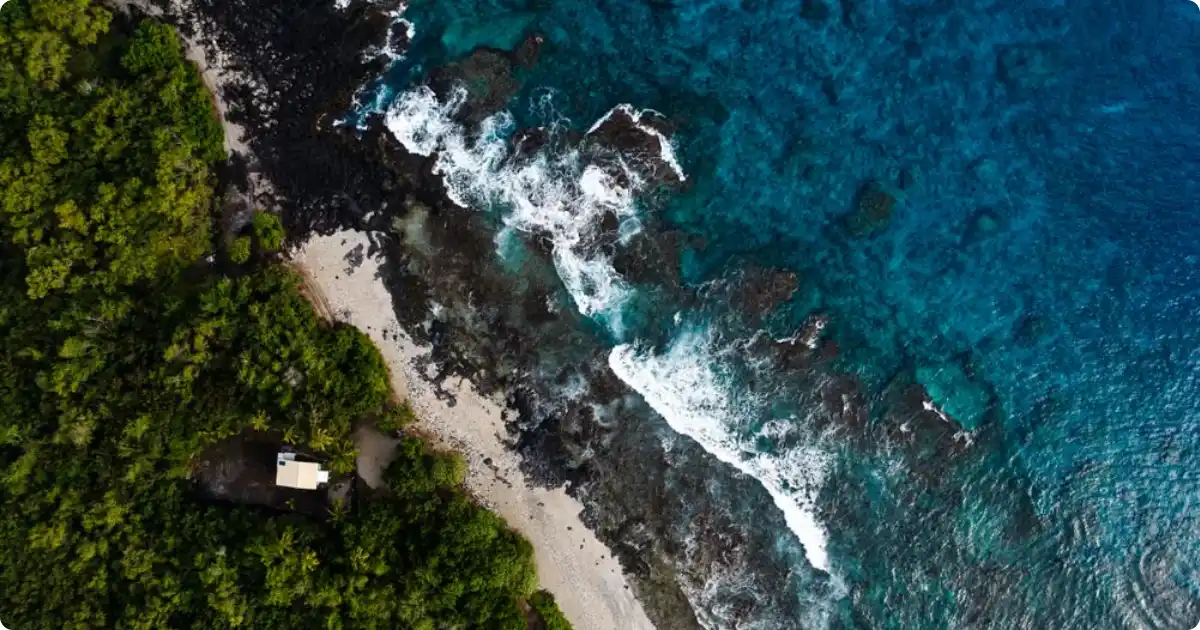

Few destinations in the world carry as much weight in the imagination as Hawaii. The name alone summons images of volcanic coastlines, turquoise bays, and mountains wrapped in clouds so low they brush the treetops. But Hawaii is more than the postcard. It is a collection of eight major islands, each with its own personality, landscape, and pace and knowing which one to visit, when to go, and how to plan your time there makes all the difference between a good trip and an unforgettable one.
This guide covers everything that matters: which island fits your travel style, how to budget realistically, what the best experiences are on each island, and the cultural knowledge that will make you a more welcome visitor. Whether you are planning your first trip or your fifth, this is the starting point.
What Makes Hawaii Unlike Any Other Destination
Hawaii sits roughly 2,400 miles southwest of the US mainland the most remote island chain on the planet. That isolation is not just a geographic footnote. It shaped everything: the landscapes, the plants and animals, the culture, and the food. Species evolved here that exist nowhere else on earth. The Hawaiian language nearly disappeared and is now being revived through immersion schools. The culture is layered, complex, and deeply tied to the land.
For travelers, this means Hawaii rewards attention. The beaches are extraordinary, yes but so is the history, the volcanic geology, the ocean wildlife, and the local food culture. The islands are warm year-round, which makes timing more about crowds and cost than climate. And because each island developed its own distinct character, choosing the right one for your trip is genuinely one of the most important planning decisions you will make.
What visitors often discover sometimes surprisingly is that Hawaii is not one destination. It is six visitable, distinct islands under one name.
The Main Hawaiian Islands at a Glance
| Island | Nickname | Best Known For | Crowd Level | Best For |
|---|---|---|---|---|
| Oahu | The Gathering Place | Waikiki, Pearl Harbor, Honolulu, North Shore surf | Highest | First-timers, culture, history, dining |
| Maui | The Valley Isle | Haleakala, Road to Hana, snorkeling | High | Romance, adventure, resort comfort |
| Big Island | Hawaii Island | Volcanoes National Park, black and green sand beaches, Mauna Kea | Moderate | Nature, wildlife, geological diversity |
| Kauai | The Garden Isle | Na Pali Coast, Waimea Canyon, waterfalls | Low to Moderate | Hiking, outdoor adventure, romance |
| Molokai | The Friendly Isle | Rural Hawaii, highest sea cliffs in the world | Very Low | Off-the-beaten-path, intrepid travelers |
| Lanai | The Pineapple Isle | Seclusion, luxury resorts, day trips from Maui | Very Low | Luxury, privacy, couples |
Six of Hawaii’s eight major islands are open to visitors. Each one differs meaningfully from the others in size, terrain, infrastructure, crowd level, and the type of experience it delivers.
Oahu The Gathering Place
Oahu is Hawaii’s most visited island and its population center. It is home to Honolulu, the state capital, and the legendary stretch of Waikiki Beach. Pearl Harbor, the Iolani Palace, the North Shore surf breaks, and the Diamond Head crater trail all sit on Oahu. For a first-time visitor who wants to cover a lot of ground history, culture, beaches, dining, nightlife Oahu delivers the fullest range of experiences in the least amount of logistics.
The trade-off is crowds. Oahu receives roughly half of all Hawaii’s visitors, and popular spots can feel that way, especially during peak travel months.
Maui The Valley Isle
Maui is the second-largest island and widely considered one of the most beautiful. It balances resort-level amenities with genuine natural drama: Haleakala National Park, where the summit sits above the clouds; the Road to Hana, a winding 52-mile coastal drive through rainforest and waterfalls; and some of the best snorkeling beaches in the entire Pacific. Maui works well for both adventure travelers and those who want comfort alongside exploration.
Maui’s west side Kaanapali and Wailea offers the most developed resort infrastructure. The east side and upcountry regions are quieter, greener, and more locally flavored.
The Big Island Hawaii Island
The Big Island is nearly twice the size of all the other Hawaiian islands combined, which means the geography is almost absurdly varied. Lush rainforest on the eastern side gives way to lunar lava fields on the western coast. Hawaii Volcanoes National Park lets visitors walk over hardened lava flows and look into active calderas. Black sand beaches sit alongside green sand beaches the latter found nowhere else in the United States. Mauna Kea, one of the world’s great astronomical observatories, receives occasional snowfall at its 13,796-foot summit.
The Big Island rewards travelers who are willing to drive and explore. It is not a compact island plan on significant driving time between areas.
Kauai The Garden Isle
Kauai is the oldest of the main Hawaiian islands, and its age shows in its deeply eroded landscape. The Na Pali Coast, with its cathedral sea cliffs rising up to 4,000 feet, is among the most dramatic coastlines on the planet. Waimea Canyon often called the Grand Canyon of the Pacific cuts deep into the island’s interior. Kauai is slower, less developed, and more intimate than Oahu or Maui. It is an island for hikers, kayakers, and travelers who want fewer crowds and more rawness.
Infrastructure is limited in places. There is only one main road, and it does not circle the entire island. Allow more time per mile than you would expect.
Molokai and Lanai The Off-the-Beaten-Path Islands
Molokai is the most rural of the visitable Hawaiian islands. It has the highest native Hawaiian population, almost no commercial tourism infrastructure, and a slow, community-first pace that asks visitors to show up with patience and respect. It is best suited to intrepid travelers seeking something genuinely different.
Lanai sits just nine miles from Maui and swings to the opposite extreme: it is small, quiet, and home to some of the most exclusive luxury resorts in Hawaii. A day trip from Maui by ferry is one of the most popular and accessible ways to experience it without committing to an overnight stay.
How to Choose the Right Hawaiian Island for Your Trip
| Traveler Type | Best Island | Runner-Up |
|---|---|---|
| First-time visitors | Oahu | Maui |
| Adventure seekers | Big Island | Kauai |
| Romance and honeymoons | Maui | Lanai |
| Nature and wildlife | Big Island | Kauai |
| Budget travelers | Oahu | Big Island |
Choosing between the islands is the single most common planning question, and there is no universal right answer. The decision depends on what kind of traveler you are, how much time you have, and what you want to feel when you get there.
Best Island for First-Time Visitors
Oahu and Maui are the two strongest choices for a first visit. Oahu gives you the widest range world-famous beaches, historic sites, strong culinary options, and reliable infrastructure. Maui gives you more natural beauty and a slightly less crowded experience while still offering excellent hotels, restaurants, and activities. If you are visiting once and want to make sure you do not miss the definitive Hawaiian experience, start with one of these two.
Best Island for Adventure Seekers
The Big Island and Kauai are where adventure travelers find the most to work with. On the Big Island, you can hike across active lava fields, stargaze from a 14,000-foot summit, snorkel with manta rays at night, and swim in waters stained green by olivine minerals. On Kauai, the Kalalau Trail along the Na Pali Coast is one of the most challenging and visually spectacular hikes in the United States. Sea kayaking the Na Pali coastline is equally demanding and equally rewarding.
Maui is also strong for adventure Haleakala, the Road to Hana, and some of the best surf breaks on the island chain all qualify.
Best Island for Romance and Honeymoons
Maui consistently ranks as Hawaii’s top honeymoon destination. The sunsets over the West Maui Mountains, the intimate beaches of Wailea and Makena, and the world-class resort options make it a natural choice for couples. Lanai, with its extreme seclusion and luxury resorts, is worth serious consideration for travelers who want complete privacy and a premium experience.
Kauai is another strong contender quieter, more lush, and genuinely breathtaking in a way that feels intimate rather than performative.
Best Island for Nature and Wildlife
Hawaii as a whole is an extraordinary destination for wildlife, but each island offers different encounters. On the Big Island, manta ray night snorkeling is a bucket-list experience. Humpback whales migrate to the waters around Maui from roughly December through April. Hawaiian monk seals and green sea turtles are present on beaches across multiple islands. Kauai’s forests shelter several endemic bird species that cannot be found anywhere else in the world.
For pure geological and ecological diversity, the Big Island edges ahead of every other option.
Best Island for Budget Travelers
Oahu tends to offer the most options at various price points there are more budget hotels, more affordable food trucks and local plate lunch spots, and a reliable public bus system that eliminates the need for a rental car in many situations. Kauai and Maui lean toward mid-range and above, though budget travel on either island is absolutely possible with the right planning.
When Is the Best Time to Visit Hawaii
Hawaii has no bad season, but different months offer meaningfully different experiences in terms of crowds, cost, weather patterns, and wildlife activity.
Peak Season and What to Expect
Hawaii sees two distinct peaks in visitor numbers: summer (roughly June through August) and the holiday stretch from mid-December through early January. During these periods, popular beaches and hiking trails are busier, accommodation rates are at their highest, and flights from the US mainland reflect the demand. Maui’s west side and Oahu’s Waikiki area feel the peak most intensely.
Peak season is still a fine time to visit Hawaii the weather is reliable, the ocean is calm on most coasts, and the energy is high. But planning ahead and booking early is essential.
Low Season the Insider Advantage
The months of September, October, early November, and the stretch from late January through early March represent the quietest and most affordable windows for most travelers. Flights and accommodation are typically cheaper, popular spots are less crowded, and the overall experience can feel more relaxed and more local.
The trade-off is some increase in rain, particularly on the windward sides of the islands. But Hawaii’s rain showers tend to be brief and warm, and they bring the lushness that makes Kauai and the Big Island’s eastern coast so visually dramatic.
Seasonal Highlights Worth Planning Around
Humpback whale season runs from approximately December through April, with peak sightings from January to March primarily in the waters around Maui, Molokai, and Lanai. If whale watching is important to your trip, this window is worth targeting.
Winter surf season on Oahu’s North Shore runs from roughly November through February. Waves at famous breaks like Pipeline and Sunset Beach can reach extraordinary heights during this period, drawing professional surf competitions and large crowds of spectators.
The wet season runs approximately November through March, bringing fuller waterfalls and deeper greens across the islands. The dry season, April through October, brings calmer conditions on most beaches and more reliable sunshine across the board.
How to Get to Hawaii
Flying from the US Mainland
Hawaii is a US state, which means no passport is required for US citizens, no international check-in, and no customs on arrival. The main entry points are Honolulu International Airport on Oahu and Kahului Airport on Maui, with additional airports on the Big Island at Kona and Hilo, and at Lihue on Kauai.
Flight times from the US West Coast run approximately 5 to 6 hours. From the East Coast, expect 9 to 11 hours. Nonstop service is available from multiple mainland cities to Honolulu and Maui, with more limited direct options to the other islands.
Flying from the UK and International Destinations
There are no nonstop commercial flights between the UK and Hawaii. The most common routing connects through Los Angeles, San Francisco, or other US West Coast hubs before continuing to Hawaii. Total travel time from London typically runs 17 to 20 hours depending on the connection. Some travelers combine Hawaii with a California stay to break up the journey.
From other international destinations, connections through Los Angeles, Tokyo, or Sydney are the most common access points.
Which Island to Fly Into First
Most travelers from the mainland fly into Oahu or Maui first. Honolulu’s airport offers the widest range of nonstop options and the most inter-island connections if island hopping is part of the plan. Maui’s Kahului Airport has grown its nonstop mainland routes significantly and works well as a direct entry point for travelers whose focus is that island.
Kauai and the Big Island both have direct mainland service from select cities, but the options are more limited. Checking your departure city against available nonstop routes before committing to an itinerary is worth the few extra minutes of research.
Getting Around in Hawaii
Renting a Car
A rental car is the most practical way to explore any Hawaiian island outside of central Waikiki. Public transportation exists but covers limited ground on most islands, and many of the best beaches, hiking trailheads, and scenic drives require independent transport. Book early, especially during peak season rental car availability in Hawaii can tighten considerably, and rates rise sharply with demand.
On the Big Island in particular, a car is not optional. The island is simply too large and too spread out to navigate without one.
Island Hopping Between Islands
Inter-island travel requires a flight. Hawaiian Airlines and Mokulele Airlines operate the most routes between islands, with flight times running between 20 and 50 minutes depending on the pair. The process airport check-in, security, boarding, collecting bags on the other end adds two to three hours to what the flight time alone suggests.
For most travelers, visiting one or two islands per trip is the practical limit. Island hopping becomes more rewarding as trip length increases. A two-island trip typically works well with 9 to 12 days total.
One exception: a day trip from Maui to Lanai by passenger ferry is quick, affordable, and entirely manageable as a single-day excursion.
Getting Around Without a Car
On Oahu, the city bus system called TheBus is legitimate and reliable. It covers a wide range of destinations across the island, including many popular tourist areas, and runs on a consistent schedule. Oahu also has Uber and Lyft availability across most of the island.
On Maui, Kauai, and the Big Island, rideshare coverage exists in populated areas but thins out quickly in more remote parts of each island. Bus systems operate on all three islands but serve limited routes.
For visitors staying primarily in Waikiki and focusing on central Oahu, skipping a rental car is entirely feasible. For everyone else, the car remains the most flexible choice.
How Much Does a Trip to Hawaii Cost
Hawaii is consistently one of the more expensive domestic US destinations, driven by its remoteness, high import costs, and strong demand. That said, it accommodates a wide range of budgets with the right planning.
Budget Travel in Hawaii
A budget traveler focused on hostel accommodation, local plate lunch spots, food trucks, and free activities beaches, hiking, coastal walks can realistically manage Hawaii on a tighter daily spend than most assume. Oahu offers the most options in this tier: affordable accommodation in areas outside Waikiki, a functioning public bus system, and a rich street food culture centered on plate lunches and poke bowls that deliver quality well above their price point.
Camping is available on all four main islands, often in stunning locations, at very low cost with advance permit booking.
Mid-Range Travel
A mid-range trip on Oahu or Maui hotel or vacation rental accommodation, a mix of cooking and dining out, a rental car, and a selection of paid activities runs most travelers somewhere in the range of $250 to $400 per person per day, not including flights. That range shifts based on the island, the season, and how many paid tours or experiences are included.
Accommodation is usually the single largest variable. A mid-range hotel room on Maui or Kauai can cost significantly more than an equivalent room on Oahu, where more inventory keeps prices somewhat more competitive.
Luxury Hawaii
Hawaii supports world-class luxury travel at every level. Maui’s Wailea resort corridor, the Four Seasons on Lanai, the Montage Kapalua Bay, and the Halekulani in Waikiki represent some of the most celebrated hotel experiences in the Pacific. Luxury travelers will find exceptional spa offerings, private charter options for helicopter tours and catamaran excursions, and curated culinary experiences across multiple islands.
Lanai in particular is built for travelers who want absolute seclusion alongside premium service.
Where to Stay in Hawaii
| Island | Best Base Area | Alternative Area | Character |
|---|---|---|---|
| Oahu | Waikiki | North Shore | Central, walkable, directly on the beach |
| Maui | Kaanapali / Wailea | Paia / Makawao | Resort corridor; upcountry is more local |
| Big Island | Kona (west coast) | Hilo (east side) | Kona is sunnier; Hilo is wetter and closer to the national park |
| Kauai | Poipu | Princeville | Poipu is sunniest; Princeville has dramatic north shore views |
Best Areas to Stay on Each Island
On Oahu, Waikiki is the natural anchor for most visitors central, walkable, and directly on one of the island’s most famous beaches. North Shore has a handful of smaller options for travelers seeking surf culture and a slower pace. On Maui, Kaanapali and Wailea are the main resort corridors, with Paia and Makawao offering more locally flavored alternatives upcountry.
On the Big Island, Kona’s western coast is sunnier and more resort-oriented. Hilo on the eastern side is wetter, more local in character, and closer to the national park. On Kauai, Poipu is the most reliably sunny base, while Princeville on the north shore offers dramatic views and proximity to the island’s most spectacular scenery.
Types of Accommodation
Hotels and resorts dominate the major tourism corridors, with a full range of categories from budget chains to five-star properties. Vacation rentals through platforms like VRBO and Airbnb are widely available across all islands and offer the best value for families or groups, particularly for stays of a week or more. Condotels individually owned condo units managed as short-term rentals are especially common on Maui and the Big Island.
Camping, as noted, is available on all main islands through Hawaii’s Division of State Parks and county park systems. Demand for popular sites is high, and advance reservations are strongly recommended.
What to Do in Hawaii Experiences by Island
Top Things to Do on Oahu
Pearl Harbor is one of the most significant historic sites in the United States and draws visitors from around the world. The USS Arizona Memorial, the Battleship Missouri, and the Pacific Aviation Museum together provide a full day of historical context. Diamond Head crater, a 1.6-mile round-trip hike, delivers panoramic views of Honolulu and Waikiki with moderate effort. The North Shore, roughly an hour’s drive from Waikiki, is the surf capital of the world during winter months and a dramatically beautiful coastal stretch in any season.
Oahu also has a serious food culture centered on Honolulu, and its cultural offerings the Bishop Museum, the Iolani Palace, the Polynesian Cultural Center on the north shore extend well beyond what most visitors expect.
Top Things to Do on Maui
Watching sunrise from the summit of Haleakala is one of Hawaii’s most iconic experiences. The volcano’s 10,023-foot summit sits above the cloud layer, and on clear mornings the light show across the caldera is extraordinary. Reservations are now required for the sunrise viewing area and should be booked well in advance.
The Road to Hana is a full-day coastal drive through waterfalls, bamboo forests, black sand beaches, and taro fields. The drive itself is the experience the destination of Hana town is a quiet, small community best treated as a turnaround point rather than an end goal. Snorkeling at Molokini Crater, a partially submerged volcanic crater offshore from Maui’s south coast, offers some of the clearest water and most abundant marine life on the island chain.
Top Things to Do on the Big Island
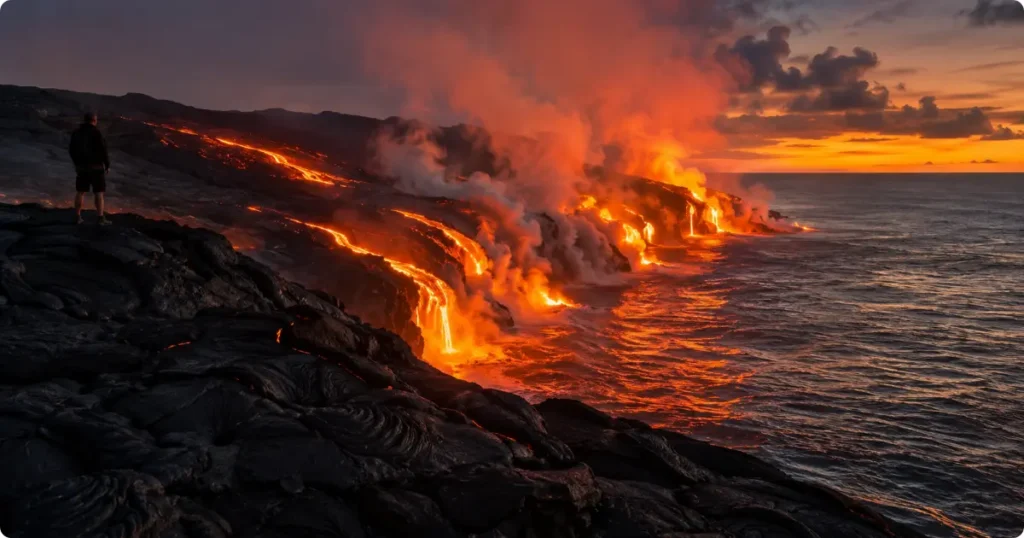
Hawaii Volcanoes National Park is a genuine wonder. The park contains two active volcanoes Kilauea and Mauna Loa and the landscape shifts from hardened lava fields to tropical rainforest within a single drive. The Thurston Lava Tube, a walk-through underground tunnel formed by ancient lava flows, is one of the park’s most accessible highlights.
Manta ray night snorkeling off the Kona coast is among the most memorable wildlife experiences in Hawaii. Adult manta rays, with wingspans reaching up to 16 feet, feed on plankton attracted by dive lights just below the surface, often circling within arm’s reach of snorkelers. Green sand beach at Papakolea requires a 2.5-mile hike each way and is one of only four green sand beaches in the world.
Top Things to Do on Kauai
The Na Pali Coast is Kauai’s defining feature and the most dramatic coastal scenery in Hawaii. It is accessible by hiking the Kalalau Trail, by sea kayak during summer months when the ocean permits, or by helicopter year-round. The helicopter perspective is the most complete the cliffs, valleys, and cascading waterfalls are simply too large to fully comprehend from the ground.
Waimea Canyon, accessible by road, reveals layer upon layer of red and orange eroded rock across a 14-mile length and depth approaching 3,600 feet. The Napali Coast State Wilderness Park and the Na Pali Coast itself offer some of the most rigorous multi-day hiking in Hawaii for experienced trekkers.
Hawaii’s Best Beaches
Hawaii’s beaches are as varied as the islands themselves. Each island has its own standout stretches of coastline, and the best beach for a particular traveler depends entirely on what they are looking for.
Lanikai Beach on Oahu, consistently ranked among the world’s most beautiful, offers calm turquoise water and views of two small offshore islands. Waikiki, for all its fame, delivers a remarkably reliable swimming beach with gentle conditions suitable for all ages and abilities. Sunset Beach and Banzai Pipeline on the North Shore transform during winter surf season into something entirely different not for swimming, but for the spectacle.
On Maui, Napili Bay is a natural horseshoe of calm water ideal for snorkeling. Makena State Park’s Big Beach offers one of the longest stretches of uninterrupted white sand on the island. Waianapanapa State Park on the Road to Hana has a black sand beach surrounded by sea caves and lava arches.
On the Big Island, Hapuna Beach State Recreation Area is widely regarded as one of the finest white sand swimming beaches in Hawaii. Punaluu Black Sand Beach is the island’s most accessible black sand beach and one of the few where green sea turtles regularly haul ashore to rest.
Kauai’s Hanalei Bay is a two-mile crescent of sand backed by the green ridgelines of the island’s north shore mountains one of the most visually stunning beach settings in the Pacific.
Food, Drink and Local Culture
What to Eat in Hawaii
Hawaii’s food culture reflects the islands’ layered immigration history. The plate lunch a scoop or two of rice, macaroni salad, and a protein such as kalua pork, chicken katsu, or loco moco is the most democratic and beloved local meal. It is filling, affordable, and available at lunch wagons and local diners across every island.
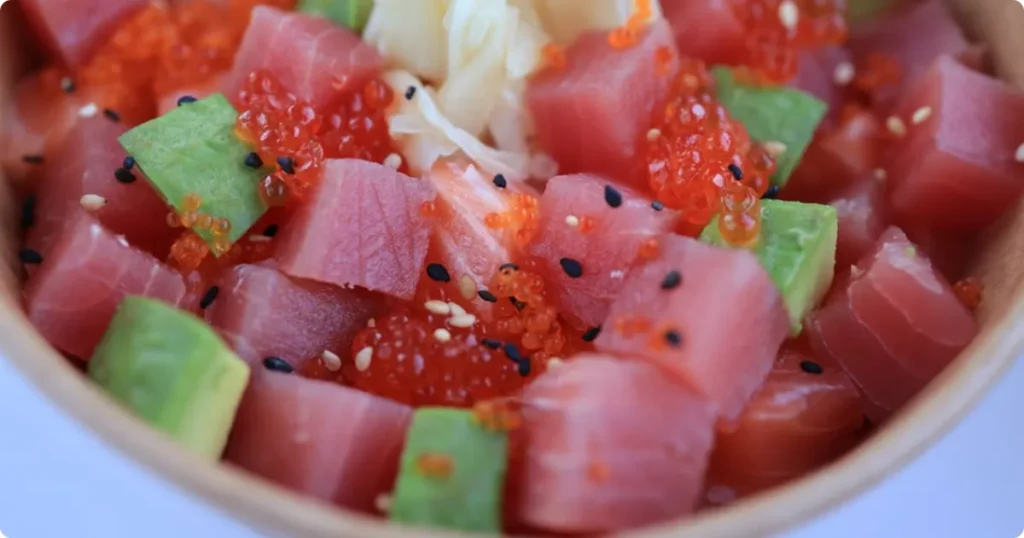
Poke chunks of raw fish, most traditionally ahi tuna, seasoned with soy sauce, sesame oil, green onion, and limu seaweed has become one of Hawaii’s most recognized food exports. In Hawaii itself, poke variations are served fresh at grocery store counters, fish markets, and dedicated poke shops. It is worth eating as often as possible.
Shave ice is Hawaii’s answer to the snow cone, but the comparison understates it. Finely shaved ice packed into a cone and saturated with flavored syrups, often served with a scoop of ice cream or sweetened condensed milk at the bottom, is one of the island’s most reliable and inexpensive pleasures.
Local coffee grown on the slopes of the Big Island’s Kona coast is among the most recognized in the world. Maui also produces a smaller volume of highly regarded single-origin coffee. Both are worth trying at their source.
Hawaiian Culture and Etiquette
Hawaii is a place that deserves engaged and respectful visitors. A few principles matter most.
The word “Hawaiian” is properly used for people of Native Hawaiian ancestry, not for all residents of the state. Using “local” or “Hawaii resident” to describe people who live in Hawaii avoids a common and easily corrected mistake.
The concept of malama aina caring for the land so that it can sustain future generations is central to Hawaiian values. As a visitor, this translates to staying on marked trails, using reef-safe sunscreen at all times (required by state law in public waters), never disturbing wildlife, and leaving every natural site exactly as you found it.
Hawaiian monk seals, green sea turtles, humpback whales, and spinner dolphins are all protected under federal law. Keeping a safe distance is a legal requirement and a demonstration of basic respect. Approaching, touching, or feeding any of these animals carries significant fines.
Some sites in Hawaii are sacred ancient temples called heiau, burial grounds, and historically significant landmarks scattered across all islands. Treating these places with the same quiet respect you would offer any sacred site in any part of the world is the right baseline.
A few Hawaiian words and phrases worth knowing before you arrive: aloha (hello and goodbye), mahalo (thank you), mauka (toward the mountain), makai (toward the ocean), and pau hana (end of the workday). Using them even imperfectly is appreciated.
Hawaii Travel Tips Practical Advice Before You Go
Book early, especially for popular experiences. Haleakala sunrise reservations, Road to Hana guided tours, and manta ray night dives fill weeks in advance during peak season. Restaurants in high-demand resort corridors can require reservations well ahead of time.
Reef-safe sunscreen is non-negotiable. Hawaii state law prohibits the sale of sunscreens containing oxybenzone and octinoxate, which have been shown to damage coral reefs. Bring mineral-based reef-safe sunscreen from home or purchase it on arrival.
Driving times are longer than maps suggest. On Kauai in particular, a single-lane highway with a 45 mph speed limit means what looks like a short drive can take significantly longer. Factor this into planning, especially for early morning activities.
Pack for micro-climates. The windward (northeast-facing) side of every island is wetter and cooler than the leeward (southwest-facing) side. The summit of Haleakala on Maui can be near freezing at sunrise while the beach at Wailea is 80 degrees. Layers matter more than most people expect.
Respect wildlife watching distances. By law, the required minimum distances are 50 yards from Hawaiian monk seals and sea turtles, and 100 yards from humpback whales. These are minimums, not targets.
Tipping follows standard US conventions. A 15 to 20 percent tip at restaurants, bars, and for tour guides is the expected norm.
Travel insurance is worth considering. Flight cancellations, inter-island connection issues, and weather delays particularly on the Na Pali Coast activities that operate only in favorable ocean conditions are real possibilities. Coverage that includes trip interruption and activity cancellation can save meaningful expense.
Final Verdict
Hawaii earns its reputation not through any single landmark but through the accumulated experience of a destination that is genuinely unlike anywhere else in the world. The volcanic geology, the ocean wildlife, the food culture, the history, and the natural beauty exist at a scale and quality that hold up across repeated visits and across every type of traveler.
The most important decision in planning a Hawaii trip is choosing the right island for what you actually want. Oahu and Maui are the most complete choices for first-timers. The Big Island rewards anyone drawn to geological spectacle and wildlife. Kauai delivers the most untouched and dramatic natural scenery. Lanai and Molokai offer experiences that require more patience and planning but reward both generously.
Whatever island you choose, arriving with some cultural awareness understanding what malama aina means in practice, knowing the history of the land, and treating both the environment and the community with the respect they are owed will make your trip better and your welcome warmer.
Hawaii is not a destination that asks you to simply show up. It asks you to pay attention. Those who do leave with something that stays with them.
