
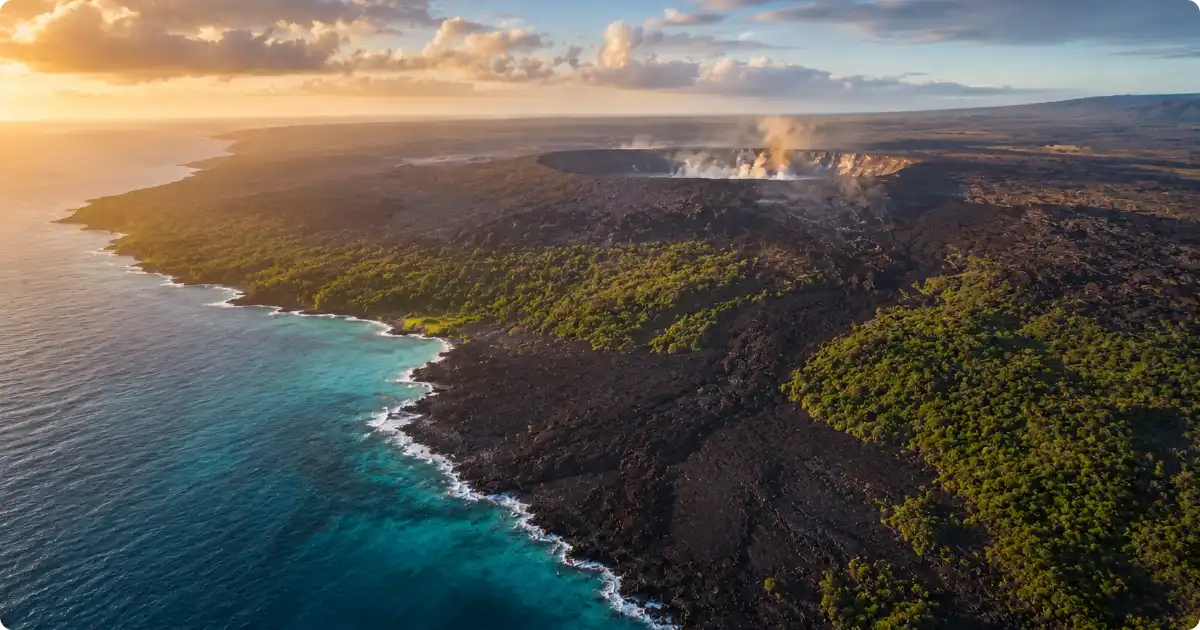

Most Hawaiian islands ask you to choose between beach and adventure. The Big Island refuses that trade-off entirely.
This is the only place in the United States where you can stand at the edge of an active volcano in the morning, snorkel above ancient coral reefs in the afternoon, and swim alongside manta rays after dark. It is also the only island in the chain where you might see snow, a black sand beach, a green sand beach, and a white sand beach all on the same day if you push it.
The island of Hawaii covers more land than all the other Hawaiian islands combined. That scale is the point. It rewards curiosity, punishes rushing, and gives back something genuinely different on every visit.
The Two Sides You Need to Know
Understanding the Big Island starts with understanding its geography. The island splits, broadly, into two very different personalities.
The Kona side the west coast is dry, sunny, and resort-friendly. This is where you find the beach hotels, Kailua-Kona town, the coffee farms, and the manta ray tours. The landscape here rolls through hardened black lava fields before opening onto clear blue water.
The Hilo side the east coast is the island’s wetter, greener, less-visited half. Waterfalls cascade through rainforests here. The Hilo Farmers Market draws locals more than tourists. Hawaii Volcanoes National Park sits on this side too, roughly a 45-minute drive from downtown Hilo.
Most visitors base themselves in Kona and drive to Hilo for a day. A better plan is to spend at least one night on each side. The island is too large and too varied to experience fairly from a single base.
How Much Time You Actually Need
Four days is the minimum to feel like you’ve actually seen the island rather than just passed through it. Five to seven days is the sweet spot enough time to reach the summit of Mauna Kea, spend a full day in Volcanoes National Park, explore both coasts, and still have room for a manta ray night swim and a slow morning at a coffee farm.
A rental car is non-negotiable. The Big Island has no meaningful public transit for travelers. Budget for driving time, too reaching the southern tip of the island from Kona takes the better part of two hours each way.
Hawaii Volcanoes National Park: The Island’s Crown Jewel
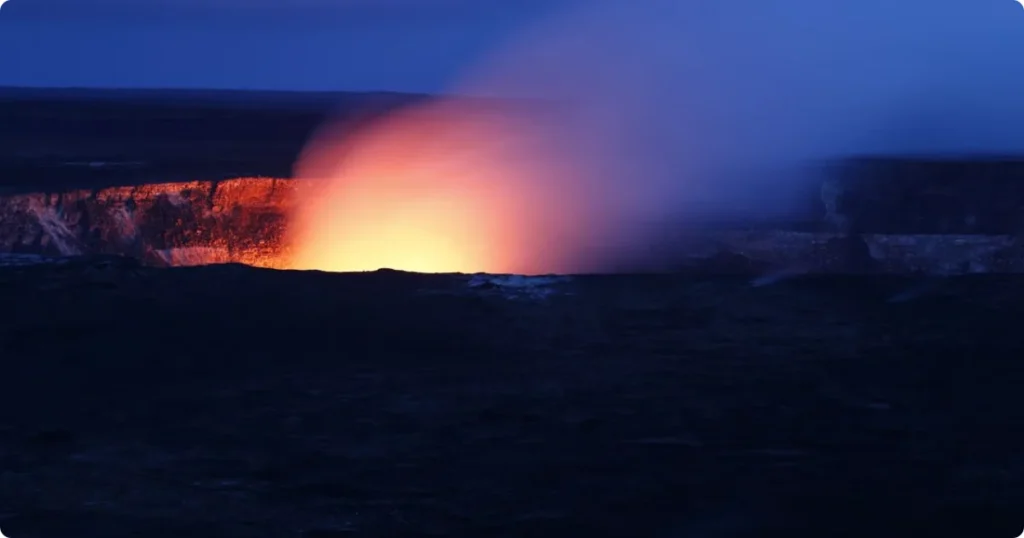
Every list of things to do on the Big Island starts here, and for good reason. Hawaii Volcanoes National Park is not just one of the most remarkable places in Hawaii it is one of the most remarkable places on Earth.
The park protects more than 500 square miles of active volcanic landscape. Two shield volcanoes anchor it: Kilauea, one of the most continuously active volcanoes on the planet, and Mauna Loa, the most massive volcano on Earth by volume. What you experience here changes with what the volcano is doing. The landscape you walk through today is genuinely different from the one visitors saw five years ago.
Kilauea and the Crater Rim Drive
The 11-mile Crater Rim Drive circles the Kilauea caldera and is the fastest way to orient yourself in the park. Pull-offs along the route give you views of the caldera floor, steam vents rising from the earth, and the surrounding rainforest. If Kilauea is actively erupting during your visit which it has done periodically the views after dark, when glowing lava reflects off the crater walls, are extraordinary.
The Kilauea Iki Trail is the single best hike in the park for most visitors. It descends into a crater that last erupted in 1959 and crosses the hardened lava lake floor. The contrast between the lush rainforest at the trailhead and the alien terrain below is striking. The full loop covers about four miles and takes two to three hours at a relaxed pace.
Thurston Lava Tube (Nahuku)
A short detour from the main drive leads to one of the park’s most accessible highlights. The Thurston Lava Tube officially named Nahuku formed when the outer shell of a lava flow cooled and hardened while molten lava continued flowing through the interior. When the flow stopped, it left behind a tunnel carved entirely by volcanic forces.
Walking through the tube takes only a few minutes, but the scale of it tall enough to stand upright, wide enough to feel genuinely cavernous is hard to shake. The surrounding trail loops through a tree fern forest that feels prehistoric in its own right.
Chain of Craters Road
This 18-mile paved road descends nearly 3,700 feet from the park’s interior to the coast. Along the way it passes shield craters, lava fields, and petroglyphs before ending where previous lava flows covered the road. There is no through-traffic; the road simply stops at the coast. Stop at the Holei Sea Arch near the end the ocean has carved a natural basalt arch that makes for one of the more dramatic viewpoints on the island.
Tips Before You Go
The park entrance fee covers access for seven days, so a single payment allows multiple visits if you are staying nearby. Download the NPS app before you arrive — it provides current eruption updates and trail conditions, both of which change frequently. Bring layers. Elevation rises sharply inside the park, and what feels warm on the coast becomes genuinely cool at the caldera rim. Early morning visits see fewer crowds and often clearer air.
The Big Island’s Beaches Are Unlike Any Others on Earth
The Big Island is one of only a handful of places in the world where you can walk on beaches of three different colors. That alone is worth building an itinerary around.
Punalu’u Black Sand Beach
Punalu’u is the most visited black sand beach on the island, and the drive to reach it — roughly an hour south of Kailua-Kona puts it within easy range of a Volcanoes National Park day trip. The sand itself is ground basalt, created when lava meets seawater and shatters into fine dark grains. The contrast with the surrounding palms and blue water makes it one of the more photographed spots on the island.
Hawaiian green sea turtles, known locally as honu, rest on the beach regularly. They are protected under federal law do not approach, touch, or disturb them. Watching them from a respectful distance is one of the genuinely special free experiences on the island.
Swimming at Punalu’u is not recommended due to the currents and the rocks. Come to walk, photograph, and watch the turtles.
Papakolea Green Sand Beach
There are only four green sand beaches in the world. One of them is on the Big Island, tucked into a cinder cone at the island’s southern tip. The color comes from olivine crystals a semi-precious mineral in the volcanic rock — that erode into the sand over time.
Reaching Papakolea requires either a 2.5-mile hike each way from the parking area at South Point, or a short ride in a local truck for a small fee. Neither option is glamorous, but the beach itself is worth the effort. It is genuinely unlike anything else in Hawaii.
White Sand Beaches: Hapuna, Kaunaoa, and Manini’owali
The Kohala Coast on the island’s northwest holds the Big Island’s best white sand beaches, and they punch well above their weight compared to beaches on other Hawaiian islands.
Hapuna Beach State Recreation Area is consistently ranked among the finest beaches in the United States. The sand is soft, the water is clear, and the gentle slope makes it excellent for swimming. It gets busy on weekends. Arrive early or visit on a weekday.
Kaunaoa Beach also called Mauna Kea Beach sits in front of a resort but is publicly accessible. Manini’owali, part of Kekaha Kai State Park, requires a short walk from the parking area and stays noticeably quieter as a result.
Best Beaches for Snorkeling
For underwater life, the best snorkeling on the Big Island is concentrated on the Kona Coast. Kahalu’u Beach Park in Kailua-Kona is the easiest entry point — the reef is close to shore, the water is calm, and sea turtles are a near-daily presence. Honaunau Bay, known locally as Two-Step, offers more advanced snorkeling over a living reef teeming with fish.
Swimming with Manta Rays at Night
This is the experience that makes people come back to the Big Island a second time.
Off the Kona coast, a resident population of manta rays gathers most evenings to feed on plankton. The rays are attracted by underwater lights that tour operators deploy into the water the lights draw plankton, and the plankton draws the mantas. On a good night, rays with wingspans reaching ten feet perform slow barrel rolls just below the surface, passing close enough to feel the water move.
How the Tour Works
Tour boats depart from Keauhou Bay or Kailua-Kona pier in the early evening. Most tours last two to three hours, including travel time. Guests enter the water with either snorkel gear or scuba equipment and hold onto a board fitted with underwater lights. The guide positions the group over the feeding area and the waiting begins.
Wet suits are provided by most operators — the water temperature at night is comfortable, but an hour in the ocean without one leaves most people cold by the end.
What to Expect in the Water
Manta rays are not guaranteed. Sightings happen on the vast majority of tours operators often quote a 90 percent or higher success rate but conditions vary. On nights when the rays do show, the experience tends to be quietly overwhelming. These are large, ancient animals moving through complete darkness just below the surface. It is one of the few wildlife encounters that genuinely lives up to the expectation.
Choose smaller group tours when possible. Six to ten people in the water produces a better experience than a crowded group of twenty.
Mauna Kea: Stargazing at the Summit of the World
Measured from its base on the ocean floor, Mauna Kea is the tallest mountain on Earth. Its summit sits above 40 percent of Earth’s atmosphere, above the cloud line, and far enough from any city to produce some of the clearest night skies on the planet. Thirteen international observatories sit at or near the summit for exactly this reason.
Visitors can drive to the summit on a paved road but only in a four-wheel drive vehicle, and only after acclimatizing at the Visitor Information Station first.
Visiting the Visitor Information Station
The Visitor Information Station at roughly 9,200 feet elevation is the practical stopping point for most visitors. Nightly stargazing programs are held here by astronomers who bring telescopes and explain what you are seeing. Admission is free. The temperature is cold bring layers, including a hat and gloves, regardless of the temperature at sea level. Altitude affects people differently; spend at least 30 minutes here before considering the drive to the summit.
Summit Access and What to Know
The drive to the 13,796-foot summit is steep and the road is unpaved above the Visitor Information Station. Rental car companies generally prohibit the summit drive in their agreements check before you go. Guided summit tours handle the transport and provide warm gear; they also give you access to telescopes at altitude. The view above the clouds at sunset, before the stargazing begins, is reason enough on its own.
Children under 13 and pregnant visitors are advised against going to the summit due to altitude concerns.
Waterfalls Worth Driving For
The wet windward coast of the Big Island produces waterfalls that would be headline attractions anywhere else. Here they show up as pleasant additions to an already full itinerary.
Akaka Falls State Park
A 0.4-mile paved loop trail leads through a bamboo and tropical forest to two major falls. Kahuna Falls appears first, visible from a lookout across the valley. Akaka Falls follows a single 442-foot plunge into a pool below that sends mist across the viewing platform. The trail is easy and accessible for most fitness levels. Early morning brings softer light and fewer tour groups.
Rainbow Falls (Waianuenue)
In Hilo itself, less than a mile from downtown, an 80-foot waterfall drops into a lava rock pool. The surrounding banyan trees and the ease of access the falls are a short walk from the parking area make this a natural stop when spending time on the Hilo side. Arrive before 10 a.m. when the angle of sunlight through the mist regularly produces the rainbows the falls are named for.
Waipio Valley and the Hamakua Coast
The overlook at the top of Waipio Valley is one of the most dramatic viewpoints on the island. The valley floor, a thousand feet below, holds taro fields, black sand beaches, and a waterfall visible from the rim. The road into the valley is extremely steep average grade near 25 percent and is restricted to four-wheel drive vehicles. The overlook itself, however, is freely accessible and worth the drive up the Hamakua Coast for the view alone.
The drive along the Hamakua Coast connecting Hilo to Waimea passes through sugar plantation towns, agricultural land, and more waterfall overlooks. It is one of the better scenic drives on the island and easy to do without stopping at every pull-off.
Snorkeling and Marine Life Along the Kona Coast
The clear, calm water along the Kona Coast hosts some of the best snorkeling in the Hawaiian Islands. Three spots stand out.
Kealakekua Bay
This state marine sanctuary sits below a towering cliff face and holds some of the most pristine coral on the island. The bay is also the site of the Captain Cook Monument, marking the location where the British explorer died in 1779. Spinner dolphins visit regularly.
Reaching the far side of the bay requires either a kayak rental, a guided boat tour, or a strenuous 4-mile round-trip hike. The guided snorkel tours are the most popular option for good reason — they handle logistics, provide equipment, and take you directly to the best reef sections.
Kahalu’u Beach Park
For effort-to-reward ratio, Kahalu’u is the best snorkeling spot on the island. Park, walk to the water, and within minutes you are swimming above an active reef just offshore from a small beach. Green sea turtles are here most mornings. The volcanic rock on the left side of the bay concentrates fish and provides some of the most accessible coral viewing on the island.
Honaunau Bay (Two-Step)
Named for the two natural lava ledge steps that serve as the entry point into the water, this bay near Pu’uhonua o Honaunau National Historical Park offers crystal-clear water over a healthy reef. It is a local favorite and can fill up on weekends. Parking is limited arrive early or plan a weekday visit.
Kona Coffee Country: A Tour Worth Taking
Hawaii is the only state in the US where coffee is commercially grown, and the Kona Coffee Belt — a narrow strip running along the western slope of Hualalai volcano produces some of the most sought-after beans in the world. The combination of volcanic soil, cloud cover in the afternoons, and consistent temperatures creates near-ideal growing conditions.
Dozens of small farms along Highway 180 between Holualoa and Honaunau welcome visitors. Most offer free or low-cost tastings and a walk through the growing and processing operation. The difference between estate-grown Kona and blended Kona which only needs to contain 10 percent Kona beans by law becomes immediately obvious after a few side-by-side tastings.
A farm visit takes two to three hours at most and pairs naturally with an afternoon on the south Kona coast. For pure coffee tourism, the town of Holualoa above Kailua-Kona is a good starting point it sits in the middle of the coffee belt and holds a concentration of small galleries and farm stands alongside the farms themselves.
Exploring the Towns: Kailua-Kona and Hilo
The Big Island is not a theme park. Its towns are working communities, not tourist facades. Both deserve at least half a day.
Kailua-Kona
Kailua-Kona is the busiest town on the island and the de facto hub for west side visitors. Ali’i Drive runs along the waterfront and concentrates restaurants, shops, and outfitter offices within easy walking distance. The Hulihe’e Palace a 19th-century summer retreat of Hawaiian royalty sits on the waterfront and offers a quiet dose of island history. The Kailua Pier nearby is where many boat tours depart.
The town is also the best place on the island to eat local food without effort. Poke bowls, plate lunches, and food trucks operate throughout the day. The farmers markets in and around Kona offer local fruit, baked goods, and coffee that grocery stores on the mainland cannot replicate.
Hilo and the Farmers Market
Hilo is a different island in spirit. The city receives far more rainfall than Kona the lush green of the surroundings makes that clear and it operates at a slower pace. Downtown Hilo has a genuine local character, with old plantation-era storefronts and a waterfront that faces Hilo Bay.
The Hilo Farmers Market, held at its largest on Wednesdays and Saturdays along Mamo Street, draws both locals and visitors and is widely considered the best farmers market in the state. Fresh produce, tropical flowers, local honey, macadamia nuts, and prepared food from local vendors fill the stalls. It is one of the most authentic and affordable experiences on the island.
Free and Non-Touristy Things to Do on the Big Island
Several of the most memorable experiences on the Big Island cost nothing. These are the spots locals know and that most travel articles treat as footnotes.
Ka Lae (South Point): The Southernmost Tip of the USA
A 12-mile paved road off Highway 11 leads to Ka Lae, the southernmost point of land in the entire United States. The cliffs here drop sharply to the ocean, the water below runs a vivid blue, and the wind blows with enough force to lean into. It is believed that Polynesian voyagers first landed in Hawaii near here around 750 AD.
A rusted iron ladder bolted into the cliff face is used by locals who cliff-jump into the water below. It is one of the more unusual landmarks on the island and completely free to visit.
Pololu Valley Lookout
At the northern tip of the island, past the historic town of Hawi, a short drive ends at the Pololu Valley Lookout. The view down into the valley — with its dark sand beach, cliffs, and dense green vegetation rivals Waipio for drama. A steep trail descends to the valley floor. The overlook itself is free and takes about five minutes to reach from the parking area.
Petroglyphs at Pu’u Loa
The lava fields of the lower Chain of Craters Road hold the largest concentration of petroglyphs in Hawaii. An estimated 23,000 individual images are etched into the basalt here, created by Hawaiian ancestors over several centuries. The 0.7-mile round-trip trail to the main petroglyph field is easy and rewarding. Admission is covered by the park entrance fee.
Waipio Valley Overlook
Covered earlier in the waterfall section, but worth repeating here: the Waipio overlook is free, accessible, and consistently delivers one of the best views on the island. It takes under five minutes from the car. Budget 20 minutes to take it in properly.
Things to Do on the Big Island with Kids
The Big Island is well suited to families, though it requires more driving than most destinations. A few standout experiences hold up for children of most ages.
Hawaii Volcanoes National Park works well for kids primarily because of its visual immediacy — steam vents, lava landscapes, and the walk-through lava tube all produce the kind of awe that does not require any explanation. The Thurston Lava Tube in particular is reliably popular with younger visitors.
Kahalu’u Beach Park is arguably the best snorkeling spot on the island for children. The water is calm, entry is easy, and sea turtles are a near-daily sighting. Snorkel gear rental is available directly from vendors near the parking area.
The Hilo Farmers Market moves at a relaxed pace and exposes kids to tropical fruits they are unlikely to find anywhere else. Dragon fruit, rambutan, and lilikoi (passion fruit) tend to generate genuine enthusiasm.
Manta ray tours welcome children, and operators generally advise a minimum age of around five or six for the water-based experience. Kids comfortable in the ocean with a snorkel typically handle it without difficulty. The nighttime setting and the size of the rays make it one of those childhood experiences that sticks.
Big Island Activities for Adults
Helicopter Tours
A helicopter tour covers in 50 minutes what would take two days of driving. The best routes combine the Kohala Coast waterfalls with a pass over the volcano. Operators depart from both Kona and Hilo airports; Hilo-based tours generally get closer to the active volcanic activity. If budget allows for one splurge on the island, this is the one.
Luaus
Big Island luaus are not the most polished in Hawaii Maui and Oahu have a larger event infrastructure but they deliver on the fundamentals: open-air setting, local food, storytelling through hula, and fire dancing. The Voyagers of the Pacific Luau in Kailua-Kona and the Island Breeze Luau are the most established options on the west side. Book in advance; popular dates fill early.
Kona Brewery and the Local Food Scene
Kona Brewing Company operates its flagship brewpub in Kailua-Kona, where the full beer lineup is available alongside food that actually justifies the stop. The Big Island’s food scene leans heavily local grass-fed beef from upcountry ranches, fresh catch from Hilo’s Suisan Fish Market, and shave ice that operates on an entirely different level from the mainland versions. A slow afternoon moving between a fish market, a poke shop, and a shave ice stand is a perfectly legitimate way to spend three hours.
Final Verdict
The Big Island is the right choice for travelers who want Hawaii to surprise them. It does not have the resort density of Maui or the dining scene of Oahu, but it offers something neither of those islands can match: the feeling that the land itself is still being written.
An active volcano. Three types of beach. Night swims with rays the size of dining room tables. A summit above the clouds. The petroglyphs of ancestors carved into a lava field by the sea.
Anchor the itinerary around Hawaii Volcanoes National Park and the manta ray night swim those two experiences justify the flight on their own. Build everything else around them by geography, working the Kona coast one day and the Hilo side another. Spend at least one evening doing nothing but watching the sun go down from the water.
The Big Island rewards anyone willing to drive past the obvious. Give it enough time to reveal itself properly.
