
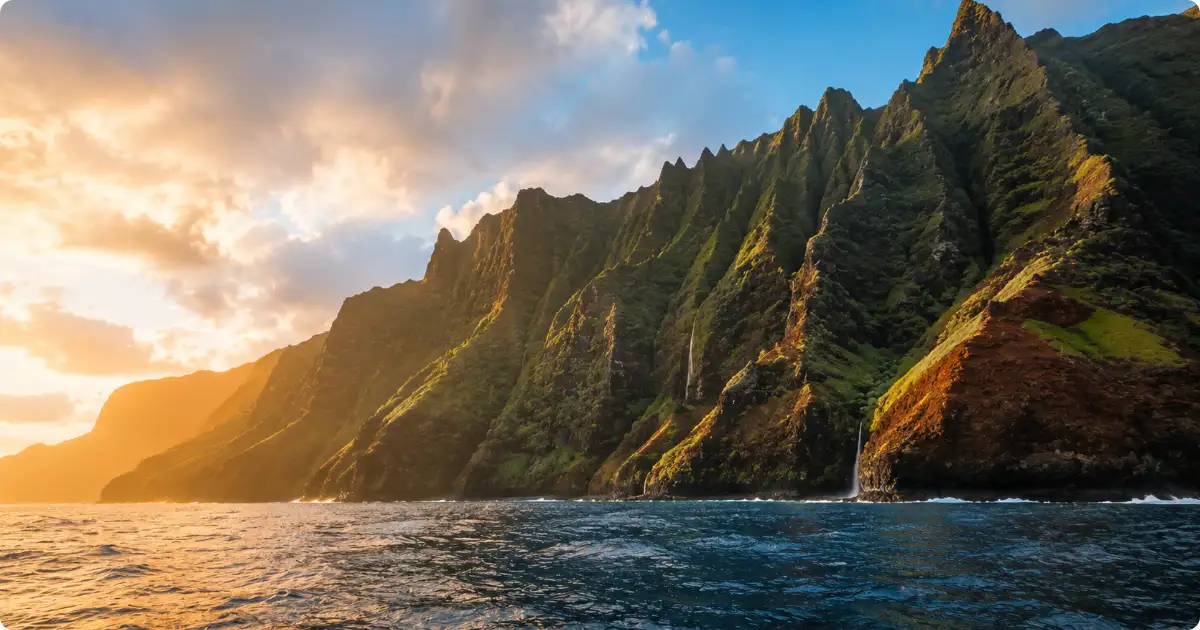

Kauai is the kind of place people describe with words that sound like exaggeration until they arrive. Razor-edged cliffs dropping straight into the Pacific. Waterfalls so tall they seem to fall from the clouds. Beaches that take a real effort to reach and feel, because of that effort, almost entirely your own.
Of all the Hawaiian islands, Kauai has held onto something the others have largely traded away: wildness. Only a fraction of the island is accessible by road. The rest is jungle, canyon, and coastline that can only be reached by boat, helicopter, or two feet on a muddy trail.
That’s what makes planning a trip here different. The question isn’t just what to do in Kauai. It’s how to match the right experiences to the time you have, the people you’re with, and what you actually want from an island this raw and remarkable.
This guide covers every corner of it.
What Makes Kauai Different From Every Other Hawaiian Island
Kauai sits at the northwestern end of the Hawaiian island chain, and its age shows in the landscape. Millions of years of erosion have carved it into something extraordinary: the Waimea Canyon, often called the Grand Canyon of the Pacific; the Na Pali Coast, with its fluted sea cliffs that rise more than 4,000 feet; and a mountainous interior so wet that Mount Waialeale, near the island’s center, is one of the rainiest places on Earth.
That rainfall is the reason Kauai earned its nickname. The Garden Isle isn’t a marketing phrase it’s an accurate description of an island covered in tropical green in every direction you look.
What it doesn’t have is the development that defines Oahu or the resort density of Maui. There are no skyscrapers in Kauai. Building height is capped by law, and the island’s population is small enough that the pace of daily life stays noticeably slower. Chickens wander freely through town centers. Locals greet strangers on hiking trails. The overall feeling, compared to the rest of Hawaii, is unhurried.
It’s also compact. The island is roughly 25 miles wide, but the road doesn’t circle the entire coastline. The Na Pali cliffs on the north coast cut off road access entirely, which means the island divides naturally into four regions: the North Shore, the South Shore, the East Side (also called the Coconut Coast), and the West Side. Each has its own character, and visitors often find themselves drawn to one more than the others.
The Na Pali Coast: Kauai’s Crown Jewel
Every visitor guide to Kauai eventually centers on the Na Pali Coast, and for good reason. It is genuinely one of the most dramatic coastlines on the planet. Fluted green ridges thousands of feet tall drop vertically into dark blue water. Hidden sea caves open and close with the tide. Waterfalls appear from crevices in the cliff face and disappear before they reach the sea.
What makes Na Pali unusual is that there’s no single way to experience it and the method you choose shapes what you see and how it feels.
Na Pali Coast by Boat
A boat tour is the most immersive way to experience Na Pali. You get close enough to see the texture of the cliffs, close enough to feel the spray of waterfalls, and close enough to watch spinner dolphins cutting through the bow wake.
Tours depart from two ports: Port Allen on the South Shore and Hanalei on the North Shore. South Shore departures head west and then north along the coast, covering more open ocean first. North Shore departures drop you into the scenery almost immediately.
The Na Pali stretch itself regardless of which port you leave from is the highlight. Sea caves, sea arches, hanging valleys, and the distant profile of the Kalalau Valley are all visible from the water. Most tours include snorkeling stops and, on evening departures, sunset views over the Pacific.
One thing worth knowing: the channel between Port Allen and Na Pali can be rough, particularly in winter months when northwest swells build. The ride out is bumpier than many visitors expect. If you’re prone to seasickness, choose a catamaran over a rigid hull inflatable, take preventative medication, and book a morning tour when conditions tend to be calmer.
Na Pali Coast by Helicopter
A helicopter tour covers what no boat or hiker can reach: the interior valleys, the waterfall-laced ridgelines, the Waimea Canyon viewed from above, and the full sweep of the Na Pali cliffs in a single hour. For first-time visitors who want to understand the scale of the island quickly, a helicopter flight is arguably the most efficient use of time on the island.
Doors-off flights are popular and give photographers a clean line of sight. Seats on the left side of the aircraft face the Na Pali cliffs during the standard clockwise route; the right side gets better views of Waimea Canyon. It’s worth confirming the route and seat position when booking.
Weather plays a significant role. The interior mountains generate their own clouds, and it’s possible to fly into the Waimea Canyon with clear visibility but find Na Pali shrouded. Companies will typically offer rebooking when conditions are poor, but cloud cover is a real variable, not a rare inconvenience.
Tours run roughly one hour and depart from Lihue Airport. Booking well in advance is advised, especially in peak summer months.
Na Pali Coast by Foot: The Kalalau Trail
The Kalalau Trail begins at Ke’e Beach at the end of the North Shore road and runs eleven miles along the Na Pali cliffs to Kalalau Beach. The full trail is a multi-day backcountry route that requires a camping permit. But the first two miles to Hanakapiai Beach, and the additional four miles inland to Hanakapiai Falls, are accessible without an overnight permit.
Even the short section to Hanakapiai Beach gives a ground-level perspective on Na Pali that helicopters and boats can’t replicate. The trail climbs steeply, crosses exposed ridgelines, and opens onto views of the coastline that stop most hikers cold.
Access requires a day-use reservation through the Haena State Park permit system. Reservations fill weeks in advance during peak season, and parking at the trailhead is extremely limited. The shuttle option from Waipa Foundation is the most reliable way to guarantee access.
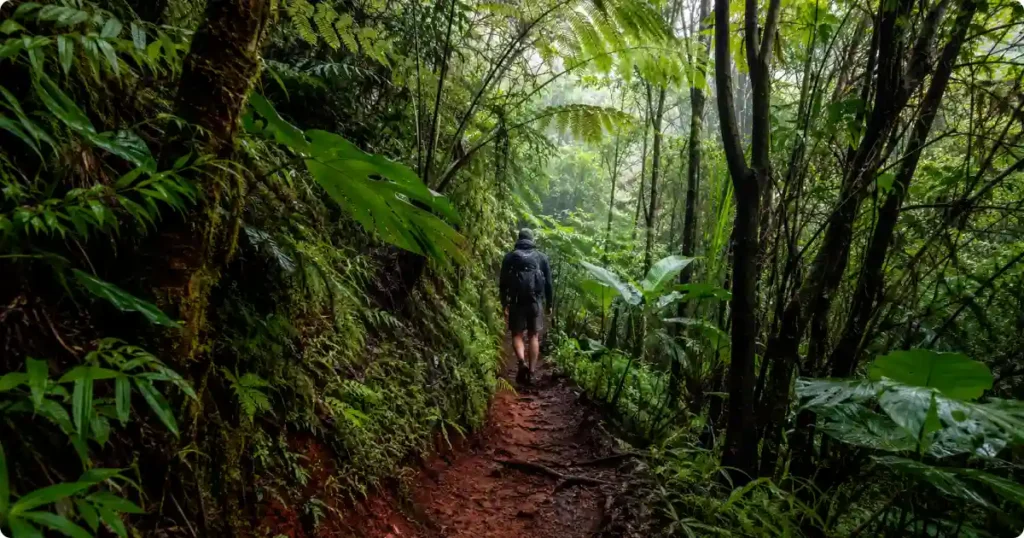
The trail is nearly always muddy. Waterproof footwear and trekking poles make a meaningful difference.
Best Beaches in Kauai
| Beach | Region | Best For | Access Note |
|---|---|---|---|
| Hanalei Bay | North Shore | Swimming, beginner surfing, paddleboarding, sunset | Free; food and shops within walking distance |
| Poipu Beach | South Shore | Families, snorkeling, turtle and monk seal sightings | Free; most accessible year-round beach on the island |
| Ke’e Beach | North Shore | Snorkeling, Na Pali views, Kalalau Trail access | Timed entry reservation required through Haena State Park |
| Tunnels Beach (Makua Beach) | North Shore | Snorkeling, experienced surfing | Free; roadside parking only — arrive early |
| Polihale State Park | West Side | Remote beach, sunset, Na Pali cliff views | 4WD recommended; several miles of rutted dirt road |
Kauai has more than sixty beaches, and they vary considerably in character. Some are calm and family-friendly. Others are remote and subject to dangerous shore breaks. Knowing which is which before you go matters.
Hanalei Bay
Hanalei Bay is the North Shore’s centerpiece: a wide crescent of sand backed by taro fields and the ridgelines of the Na Pali mountains. In summer, the bay calms to a gentle surf that’s ideal for swimming, paddleboarding, and beginner surfing. In winter, the same bay generates serious swells that draw experienced surfers from around the island.
The town of Hanalei sits directly behind the beach, which makes this one of the easiest beaches to spend a full day at. Food trucks, coffee shops, and restaurants are all within walking distance. Sunset here, on a clear evening, is a standout experience.
Poipu Beach
Poipu is the South Shore’s anchor beach and one of the best all-around options on the island. A natural rock jetty divides the beach into a calmer swimming cove and a more exposed surf break, which gives it something to offer both strong swimmers and families with small children.
Hawaiian monk seals occasionally rest on the sand here. They’re endangered, protected by federal law, and should be given a wide berth — rangers typically cordon off the area when a seal is present. Green sea turtles are a regular sight both on the beach and in the nearshore water.
Ke’e Beach
Ke’e sits at the very end of the North Shore road, where the highway gives way to the Kalalau Trail. It’s a small beach with a calm lagoon protected by a reef good for snorkeling when conditions allow and dramatic views of the Na Pali cliffs just around the headland.
Access requires a timed entry reservation through the Haena State Park system. Because of the permit requirement and limited parking, the beach tends to stay less crowded than it otherwise would, which is part of what makes it worth the planning effort.
Tunnels Beach (Makua Beach)
Tunnels Beach gets its name from the lava tube formations that run beneath its reef. The result is some of the island’s best snorkeling in calm summer conditions: clear water, healthy coral, and dense fish populations. Experienced surfers also use the break here in larger swells.
Parking is informal and limited to a narrow stretch of roadside spots. Arriving early is necessary, not optional.
Polihale State Park
Polihale is the most remote beach on the island and one of the longest stretches of sand in Hawaii. It sits at the western base of the Na Pali cliffs on land that belongs to the US military on one side and a state park on the other. Reaching it requires driving several miles down a rutted dirt road — standard sedan clearance is a real concern in wet conditions.
The reward is a beach that feels genuinely far from everything. Sunset views here, with the Na Pali cliffs catching the last light, are extraordinary. Swimming can be dangerous due to strong shore break, particularly in winter. The beach is best treated as a place to walk, watch the water, and stay until dark.
Hiking in Kauai: Trails Worth the Effort
| Trail | Distance | Difficulty | Highlight | Region |
|---|---|---|---|---|
| Canyon Trail | ~3 miles round trip | Moderate | Waipo’o Falls, an 800-foot double-drop waterfall into the canyon | West Side / Waimea Canyon |
| Awa’awapuhi Trail | 6 miles round trip | Strenuous | Ridgeline overlook above the Na Pali coastline | West Side / Koke’e |
| Pihea Trail | ~4 miles one way to Alaka’i junction | Moderate | Sustained Na Pali views; descends into high-elevation swamp | West Side / Koke’e |
| Hanakapiai Falls | 8 miles round trip | Strenuous | 300-foot waterfall at the end of a lush valley | North Shore |
| Sleeping Giant Trail | ~4 miles round trip | Moderate | Ridge views of the Coconut Coast and interior mountains | East Side |
| Maha’ulepu Heritage Trail | 3.5 miles one way | Easy | Coastal headlands, sea caves, tidal pools, turtle sightings | South Shore |
Kauai has more hiking trails per square mile than nearly anywhere in the United States. The terrain ranges from easy coastal walks to strenuous backcountry routes that require multi-day permits and significant physical preparation. The best trails reflect how varied the island’s geography actually is.
Waimea Canyon and Koke’e State Park
Waimea Canyon is a ten-mile-long gorge carved by the Waimea River into the volcanic rock of the island’s west side. The colors deep reds, burnt oranges, shadowed greens shift with the light and the clouds, and the scale of the canyon doesn’t fully register until you’re standing at one of the overlooks watching a waterfall disappear into the valley floor far below.
Koke’e State Park sits above the canyon and extends to the Kalalau Lookout, which offers what many consider the most dramatic view on the island: the Kalalau Valley dropping from a 4,000-foot ridge straight to the ocean, with the full sweep of the Na Pali cliffs stretching west.
Recommended hikes in the area:
The Canyon Trail (approximately 3 miles round trip from the Pu’u Hinahina Lookout) leads to Waipo’o Falls, a 800-foot double-drop waterfall that falls in two stages into the canyon. The trail is well-marked and moderately graded.
The Awa’awapuhi Trail (6 miles round trip, strenuous) ends at a ridgeline overlook that hangs above the Na Pali coastline. The elevation gain is significant and the trail descends sharply to the viewpoint which means the return trip is the harder half.
The Pihea Trail (roughly 4 miles one way to the Alaka’i Swamp junction, moderate) skirts the rim above the Kalalau Valley and offers sustained Na Pali views before descending into one of the world’s highest-elevation swamps.
The canyon area sits above the cloud layer much of the time. Cloud cover is common even on days when the coast is clear, and trails can be muddy at any time of year. The entrance fee for the park is paid at the booth on Koke’e Road.
Hanakapiai Falls
Hanakapiai Falls sits at the end of an eight-mile round-trip hike that begins at the Ke’e Beach trailhead. The first two miles follow the Kalalau Trail to Hanakapiai Beach. From there, the trail turns inland and follows Hanakapiai Stream through a lush valley to the base of a 300-foot waterfall.
The falls themselves are striking: a single plunge off a sheer cliff face into a clear pool surrounded by mossy boulders and ferns. The approach through the valley is equally beautiful.
The stream crossing can be hazardous after rain. Flash flooding is a real danger in this valley, and the trail closes when water levels rise. Checking conditions before setting out is not optional it’s essential.
Sleeping Giant Trail
The Sleeping Giant (Nounou Mountain) trail climbs through forest on the East Side of the island to a ridge with panoramic views of the Coconut Coast and the interior mountains. The trail is accessible from two trailheads, east and west, and can be hiked as a loop.
It’s a good choice for visitors staying on the East Side or those looking for a shorter, accessible hike. The round trip is roughly 4 miles with moderate elevation gain, and the ridgeline views are more rewarding than the trail’s modest reputation suggests.
Maha’ulepu Heritage Trail
The Maha’ulepu Heritage Trail follows the South Shore coastline east from Shipwreck Beach, running along exposed headlands and past sea caves, fossilized sand dunes, and tidal pools. The trail is flat, unshaded, and approximately 3.5 miles one way.
Green sea turtles swim in the nearshore water below the trail. The views of the open Pacific and the jagged coastline are some of the most dramatic on the South Shore, and the trail is uncrowded relative to the more famous North Shore hikes.
Water Activities and Ocean Experiences
Kauai’s water is warm, clear in most places, and full of marine life. The range of activities reflects the full spectrum of what the Pacific offers here.
Snorkeling
The best snorkeling sites on Kauai are reef-dependent, and reef health varies by location and season. In calm summer conditions, Tunnels Beach and Ke’e Beach on the North Shore offer the island’s richest underwater terrain. Poipu Beach is the most reliable year-round option, with a protected cove, good visibility, and regular turtle and monk seal sightings. Anini Beach, tucked behind a long fringing reef, has exceptionally calm water and is well-suited for beginners.
Gear is available for rent at multiple locations across the island. Reef-safe sunscreen is legally required in Hawaii — products containing oxybenzone and octinoxate are banned to protect the coral reef.
Kayaking to Secret Falls
Secret Falls (Uluwehi Falls) is a 120-foot waterfall accessible only by kayaking up the Wailua River and hiking inland through a forest trail. The full trip kayak, hike, and return takes most of a day.
Guided tours are available through several operators and include local historical and cultural context along the route. Self-guided options exist for those comfortable with kayaking, but the river can run fast in wet conditions and the jungle trail requires some route-finding.
The falls themselves are worth the effort: a single clean drop into a wide pool, surrounded by forest, with no road access keeping the crowds manageable.
Surfing and Paddleboarding
Kauai has surf for every level, but matching skill level to location matters. Hanalei Bay is the island’s best-known beginner surf spot, particularly near the pier, where waves break more slowly and lifeguards are present in season. Poipu Beach also has beginner-friendly breaks on the western side.
Paddle boarding on the Hanalei River is a low-stakes alternative to ocean paddling and gives a different perspective on the North Shore’s interior landscape. Rentals are available from shops in Hanalei town.
More advanced surfers will find their own way to the breaks at Tunnels, Pakala (also called Infinities, on the West Side), and various North Shore reef breaks that come alive in winter swell.
Kauai Activities for Families
Kauai works well for families, though the experience depends heavily on the ages of the children involved. Younger children (roughly under 8) are best served by the South Shore: Poipu Beach is calm, walkable, and has enough incidental wildlife — turtles, monk seals, small reef fish to hold a child’s attention without requiring long hikes or boat trips.
The Spouting Horn, a lava tube blowhole near Poipu, takes about fifteen minutes and involves zero exertion, but produces a predictable geyser of seawater that children reliably find satisfying. The vendors selling jewelry and crafts in the adjacent lot make it a complete outing.
Wailua Falls, a 173-foot double-chute waterfall on the East Side, is visible from a paved parking area with a short walk. No hike required. Families with older children who can manage more elevation and uneven terrain should consider the Wai Koa Loop Trail in the north, which runs through a working plantation and ends at a small man-made waterfall in a botanical setting.
Kauai Mini Golf and Botanical Garden in Kilauea is worth mentioning for its combination of play and native plant education, and the Princeville Botanical Garden offers guided tours with a chocolate-tasting component that lands well with children of most ages.
For families that want to get on the water, a Na Pali catamaran tour is manageable for children who are comfortable on boats. The snorkeling stop en route gives kids a direct encounter with tropical fish, which tends to be a highlight of the whole trip.
Things To Do in Kauai for Couples
Kauai has a texture that rewards unhurried time, which makes it exceptionally well-suited to couples. The question is less about finding romantic things to do and more about choosing the ones that match how you actually want to feel.
A sunset boat cruise along the Na Pali Coast hits a peak that’s hard to match elsewhere: golden light on ancient cliffs, the Pacific going quiet, and a sky that changes every few minutes until dark. For couples who want one obvious answer to the question of what not to miss, this is it.
The Hanalei Bay area has a particular quality in the early morning before crowds arrive paddleboarding on the river, coffee from the Hanalei Bread Company, and a slow walk along the beach before the day gets going. It’s the kind of itinerary that doesn’t sound like much until you’re in it.
For something more active, the kayak trip to Secret Falls has a natural arc that makes the day feel earned: the paddle, the hike through the jungle, the waterfall, and the return. Couples who travel well together generally find this to be one of the most memorable days on the island.
For an evening, drinks at the 1 Hotel Hanalei Bay with a table on the balcony looking out over the bay and mountains is one of the island’s more quietly spectacular options. Book in advance and request the view.
Free Things To Do in Kauai
Kauai has no shortage of experiences that cost nothing beyond the price of getting there.
Hanalei Bay is free to access, and walking the full length of the beach at any time of day costs nothing. Hanalei Pier at sunset is a Kauai institution that draws locals as much as visitors.
Wailua Falls can be viewed from the roadside overlook without any entry fee. The falls are particularly dramatic after rain, when the volume roughly doubles.
The Maha’ulepu Heritage Trail on the South Shore is free and open to the public, starting from Shipwreck Beach near the Grand Hyatt.
Waimea Canyon Overlook (the main viewpoint off Waimea Canyon Drive) offers an extraordinary perspective on the canyon without requiring a park entry fee. The overlooks themselves are free; the fee applies to those entering the park for hiking.
Spouting Horn is free to visit and takes less than twenty minutes.
Limahuli Cold Pond, a natural freshwater pool just off the main highway near Haena, is a local favorite for a quick swim at no cost.
Watching sea turtles at Poipu Beach is free and often happens without any effort at all the turtles haul out on their own schedule, and visitors simply give them room.
Farmers markets on the island the Saturday market in Hanalei and the Tuesday Waipa Farmers Market are free to browse and a good way to spend a morning around local food, produce, and vendors.
Cultural and Local Experiences Worth Having
Luau
A luau is easy to write off as a tourist production, and the more performative versions justify that skepticism. But a well-chosen luau is one of the few ways to encounter Hawaiian cultural traditions hula, imu cooking, oli chanting, traditional food in a context designed for that purpose. The Luau Kalamaku at the Kilohana Plantation is among the better-regarded options on the island. Booking in advance is essential.
Botanical Gardens
Kauai’s botanical gardens reflect the island’s role as one of the most botanically diverse places in the Pacific. The National Tropical Botanical Garden operates two sites near Poipu: the Allerton Garden, with its dramatic fig tree roots and guided-only tours, and the McBryde Garden, home to one of the world’s largest collections of native Hawaiian plants.
On the North Shore, the Limahuli Garden and Preserve occupies a valley with a view of the Na Pali cliffs and preserves ancient taro terraces alongside native species recovery efforts. The setting is exceptional and the guided tour includes cultural context most visitors don’t encounter elsewhere on the island.
Farmers Markets and Local Food
Poke is the baseline, and Kauai’s version benefits from proximity to the fishing boats that supply it. Fresh-caught ahi prepared the day it’s landed is a different thing from the same dish made with fish that traveled further. Any poke counter near the harbor areas is worth investigating.
Shave ice is a Hawaiian institution, not a novelty, and the better versions on Kauai use fresh fruit syrups. Wishing Well Shave Ice in Hanalei and Tege Tege Shave Ice in Kapa’a both use organic fruit and have strong local followings.
The farmers markets are worth a morning. Hanalei’s Saturday market and the Waipa Tuesday market both include vendors selling fresh coconuts, tropical fruit, local honey, and prepared food. They run early and tend to wind down by mid-morning.
Hanapepe, a small town on the West Side, has an art gallery walk on Friday evenings that draws local artists and is one of the quieter, genuinely local social events the island offers.
How to Spend 4 Days in Kauai
Four days is a workable amount of time if the itinerary is realistic about driving distances, trailhead reservations, and weather flexibility. Here’s a framework that covers the island’s main regions without overloading any single day.
Day 1 North Shore: Arrive and head directly to the North Shore if your lodging allows. Spend the afternoon at Hanalei Bay, walk the pier, and get dinner in Hanalei town. The adjustment to island pace is easier if the first day doesn’t involve a schedule.
Day 2 Kalalau Trail and Na Pali: Book a Haena State Park permit in advance for this day. Hike the first two miles of the Kalalau Trail to Hanakapiai Beach in the morning. If time and energy allow, continue to Hanakapiai Falls. This is a full day. Return to the North Shore for the evening Ke’e Beach at sunset is worth the extra few minutes before the drive back.
Day 3 Helicopter and South Shore: Take a helicopter tour in the morning, when interior visibility tends to be best. The afternoon can be spent on the South Shore: Poipu Beach, the Spouting Horn, and the Maha’ulepu trail if time allows. Sea turtles are reliably present at Poipu.
Day 4 Waimea Canyon and West Side: Drive west to Waimea Canyon. Spend the morning at the canyon overlooks and hike the Canyon Trail to Waipo’o Falls if the day is clear. If energy remains, continue up to Koke’e and the Kalalau Lookout. Drive back through Waimea town and stop at the shrimp trucks near the highway.
A Na Pali boat tour can replace or extend the North Shore day if the full Kalalau hike isn’t a priority. The boat and helicopter are complementary, not redundant they show different things.
Is 2 Days in Kauai Enough?
Two days is a significant constraint, and honesty about what it allows is more useful than optimism.
In two days, a visitor can see one region of the island with real depth, or several regions at a pace that doesn’t allow much to settle. The Na Pali Coast by boat or helicopter and either Hanalei Bay or Poipu Beach covers the island’s most distinctive experiences and is achievable without feeling rushed.
What two days doesn’t support: driving the full island, doing both the canyon and the North Shore properly, or hiking anything that takes a full day. Trailhead reservations, particularly for Haena State Park, may also be difficult to secure with short notice.
If two days is genuinely all the time available, choose one experience that represents what drew you to Kauai in the first place Na Pali by boat, a hike, a beach day and do it well. The island rewards attention more than volume.
Practical Tips Before You Go
A rental car is non-negotiable. Public transportation on Kauai is limited and impractical for reaching most attractions. A car is the only realistic way to move between regions. Book early inventory gets thin during peak summer months.
The island has microclimates. The North Shore and the interior mountains receive substantially more rain than the South Shore and West Side. On a rainy North Shore day, driving south almost always finds sun. Weather apps for Kauai are unreliable at the regional level; checking each corner of the island individually gives a more accurate picture.
Permits and reservations fill up well in advance. Haena State Park (Ke’e Beach and the Kalalau Trail) requires a timed entry reservation that can sell out weeks ahead in summer. Boat tours, helicopter flights, and guided kayak tours should all be booked before arrival.
The roads are slow. Speed limits across most of the island range from 25 to 45 mph, and traffic on the single-lane North Shore road backs up significantly in peak hours. Add more driving time than seems necessary, especially for early trailhead starts.
Reef-safe sunscreen is required by law. Products containing oxybenzone and octinoxate are banned in Hawaii to protect coral reefs. Mineral-based sunscreens (zinc oxide or titanium dioxide) are the legal and ecologically responsible alternative.
Chickens are everywhere. This is not a problem. It’s a fact of life on Kauai and, for most visitors, eventually a source of genuine amusement. Wild chickens descended from populations released during Hurricane Iniki in 1992 and have thrived ever since.
Ocean safety is serious. Kauai has a higher drowning rate per capita than most US beach destinations. The shore break at many beaches is deceptively powerful, and current conditions can change quickly. Swim only at beaches where conditions are marked safe, and respect posted warning signs without exception.
Frequently Asked Questions
What is the number one thing to do in Kauai? The Na Pali Coast. Whether by boat, helicopter, or the first stretch of the Kalalau Trail on foot, experiencing the Na Pali cliffs is the defining reason most people come to Kauai. A Na Pali sunset boat cruise is the most popular single experience on the island and delivers on its reputation.
What should you not miss in Kauai? The Na Pali Coast in any form, a sunrise or sunset at Hanalei Bay, the Waimea Canyon overlooks, at least one snorkeling session at a healthy reef, and fresh poke from a local counter near the harbor. The Kalalau Trail to Hanakapiai Beach rounds out a list of what the island does that no other Hawaiian island replicates.
Things to do in Kauai with kids? Poipu Beach for calm water and turtle sightings, the Spouting Horn for a quick and memorable stop, Wailua Falls viewed from the roadside overlook, the Kauai Mini Golf and Botanical Garden in Kilauea, and a Na Pali catamaran tour for older children who are comfortable on boats. The South Shore is the most family-logistic-friendly part of the island.
Things to do in Kauai for free? Hanalei Bay, the Maha’ulepu Heritage Trail, the Waimea Canyon Overlook, Wailua Falls roadside view, Spouting Horn, Limahuli Cold Pond, sea turtle watching at Poipu Beach, the Saturday Hanalei Farmers Market, and watching sunset from any beach on the island.
Final Verdict
Kauai earns its reputation, and then some. It’s not the easiest Hawaiian island to visit the permits, the muddy trails, the unpredictable weather, and the deliberate lack of large-scale tourism infrastructure all require more planning than a beach resort on Maui. But that’s the trade-off the island has made, and it’s a good one.
What Kauai offers in return is an island that still feels like itself: raw coastline, genuine wilderness, and an unhurried pace that a week on Oahu won’t give you. The Na Pali Coast is as spectacular as advertised. The hiking is world-class. The North Shore on a clear day, with taro fields in the foreground and the ridgeline of the Na Pali mountains behind, is a view that doesn’t need a filter or a superlative.
Plan carefully, book permits early, give the island more time than you think you need, and you’ll leave understanding why people describe it the way they do.
